Latest Blog Posts

June 2026 GTA Housing Market Update: Toronto Home Sales Rise as Listings Fall—Is the Market Shifting Again?

Posted by Paul Lee on Jul 10, 2026

Toronto and GTA home sales rose 9.4% in June 2026 while new listings declined. See what the latest TRREB ...

GTA Housing Market Update May 2026: Home Sales Rise as Listings Decline

Posted by Paul Lee on Jun 10, 2026

The Greater Toronto Area housing market continued to show signs of recovery in May 2026, with home sales ...

GTA Housing Market Update – April 2026

Posted by Paul Lee on May 15, 2026

Spring market activity has picked up across the GTA, although the overall picture remains fairly balanced. ...

What the Bank of Canada’s April Rate Hold Means for the GTA Housing Market

Posted by Paul Lee on May 01, 2026

Bank of Canada interest rate 2026, Canada housing market forecast 2026, GTA real estate market update, ...

GTA Housing Market Update March 2026: Toronto Home Sales Increase While Listings Decline

Posted by Paul Lee on Apr 23, 2026

As we move further into the spring market, the Greater Toronto Area housing market is beginning to show ...

Bank of Canada Interest Rates Hold at 2.25% in 2026: What It Means for the GTA Housing Market

Posted by Paul Lee on Mar 27, 2026

The Bank of Canada has announced that it is holding its key interest rate at 2.25%, a move that reflects ...

RSS

GTA January 2026 Market Update

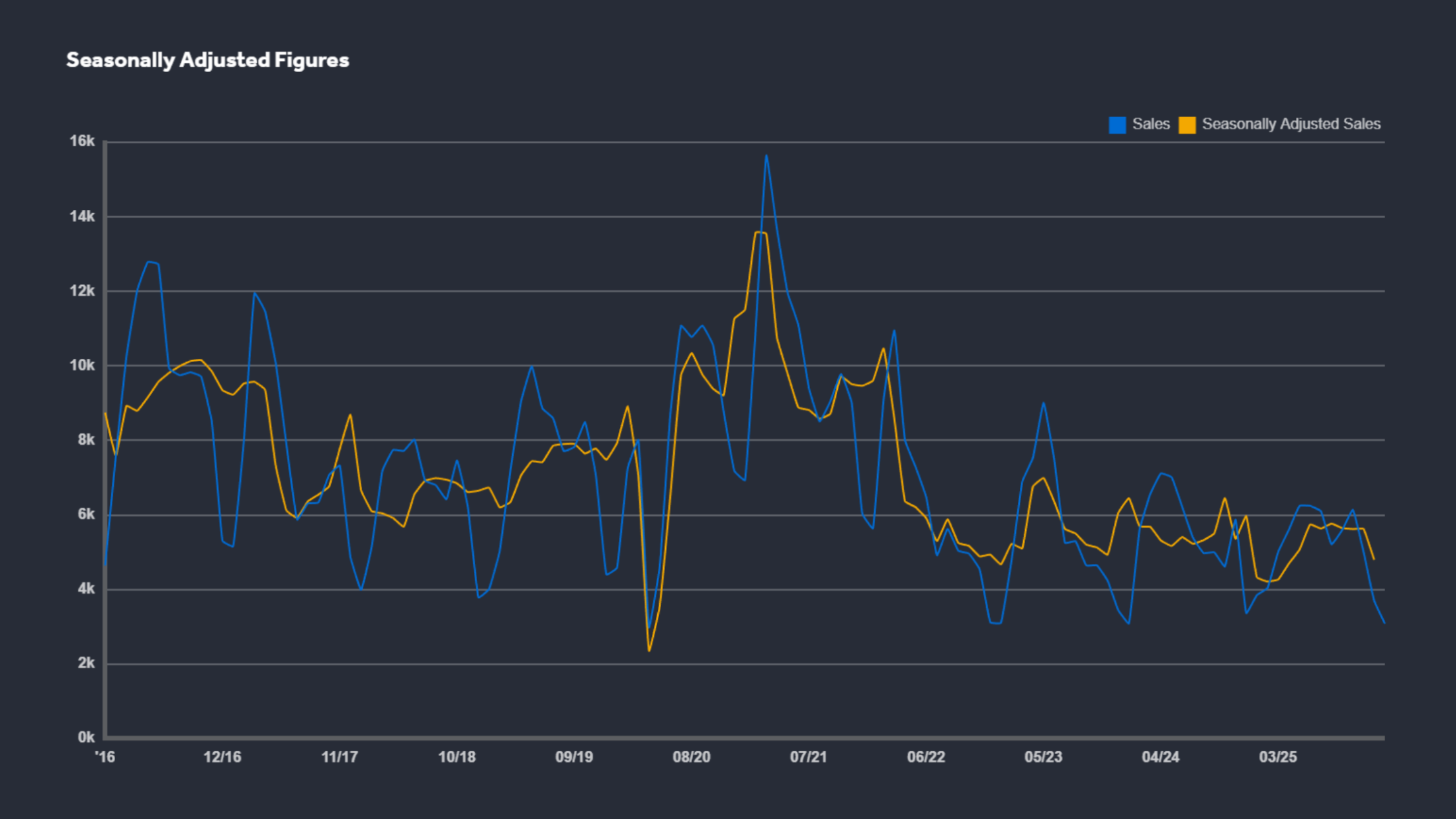
January activity reflected typical seasonal softness combined with continued buyer caution, resulting in lower sales and modest price adjustments compared to last year.

Sales declined more sharply than new listings, signalling reduced urgency among buyers. At the same time, pricing has adjusted gradually rather than abruptly, pointing to a market that is stabilizing rather than under pressure.

Improved affordability and more balanced inventory are creating better negotiating conditions, particularly for prepared buyers who are focused on value rather than timing the market.

According to the 2026 TRREB Market Outlook, market conditions are expected to improve gradually as confidence around employment and the broader economy strengthens. Pent-up demand remains on the sidelines and is likely to re-enter the market once conditions stabilize.

For now, the GTA remains in a more balanced phase — offering more choice, less competition, and a clearer path for informed decision-making.

Subscribe to my newsletter for market updates, local trends, and data-driven insights to help you stay ahead.

Read

A Slower Start Sets the Tone for a More Balanced Year Ahead

The Greater Toronto Area (GTA) housing market opened 2026 at a measured pace. January activity reflected a combination of early‑year seasonality and continued buyer caution, resulting in lower sales volumes and softer pricing compared to last year. While the headlines may suggest slowdown, the underlying story is more nuanced — one of adjustment, improving balance, and emerging opportunity.

This update combines January 2026 market statistics with broader insights from the 2026 TRREB Market Outlook & Year in Review, offering context on where the market stands today and what may lie ahead.


January 2026 GTA Market Snapshot

January’s numbers highlight a market that is resetting rather than retreating.

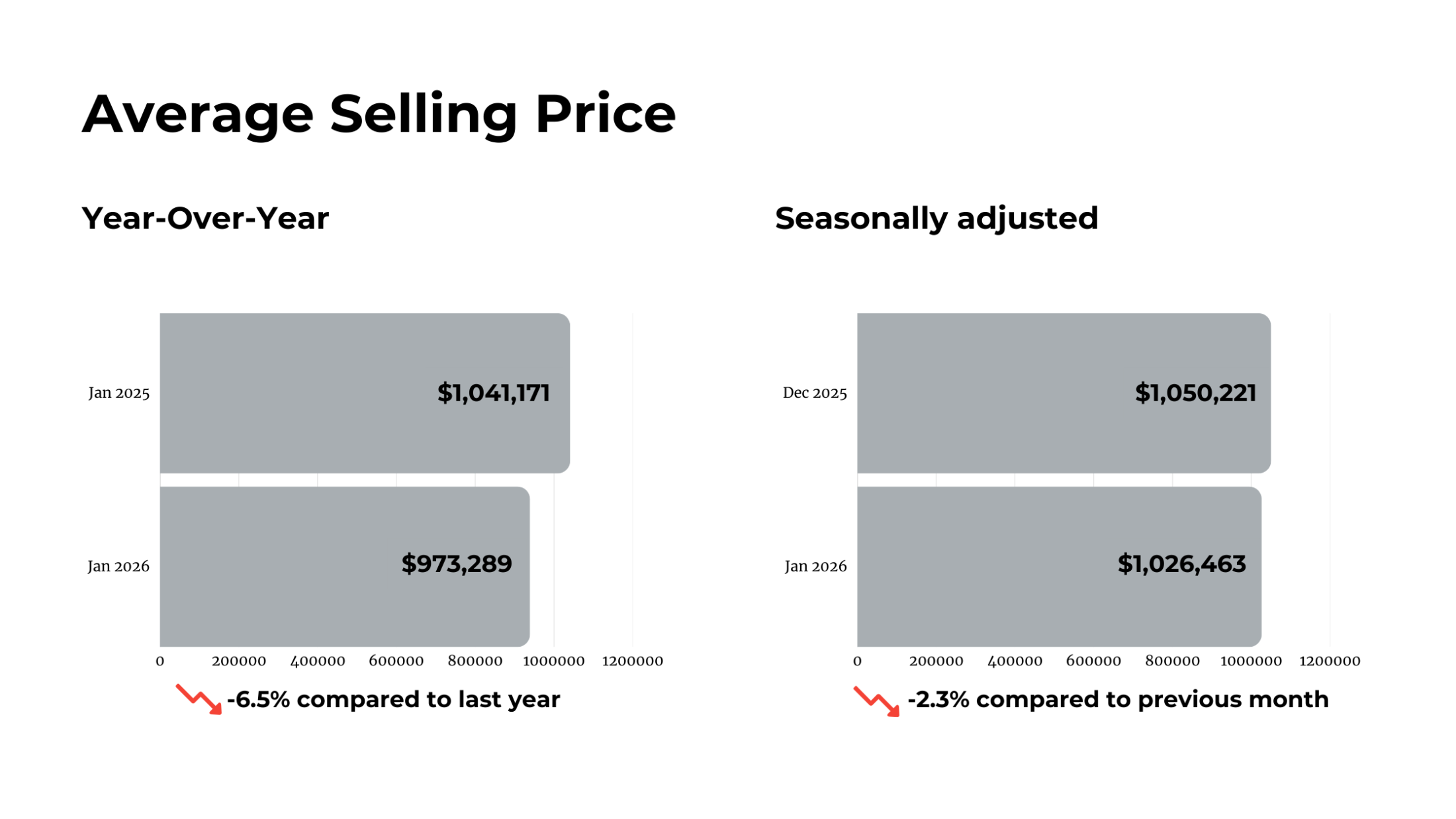
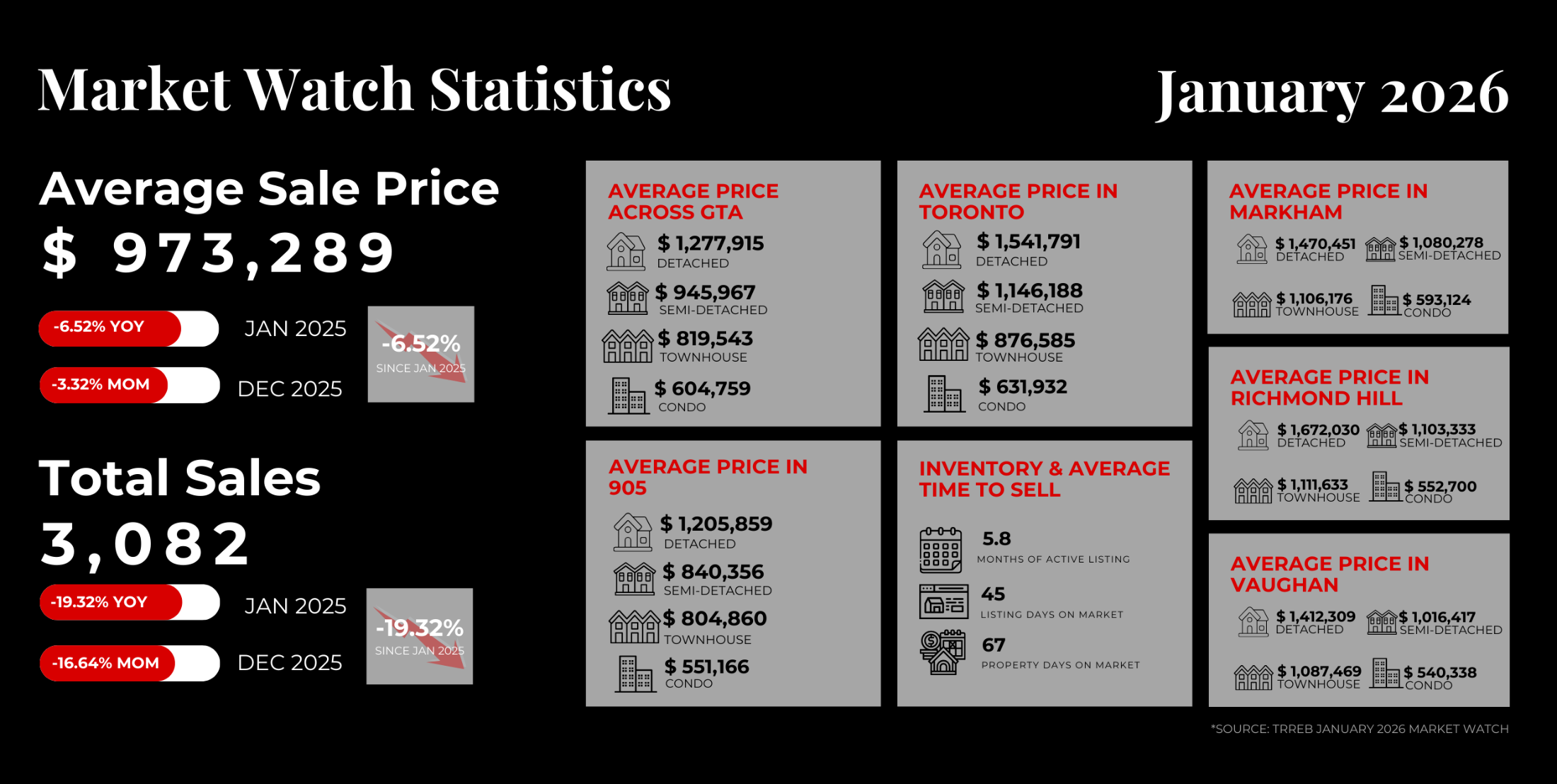
  • Average Home Price: $973,289 (down 6.5% year‑over‑year)

  • Home Sales: 3,082 transactions (down 19.3% year‑over‑year)

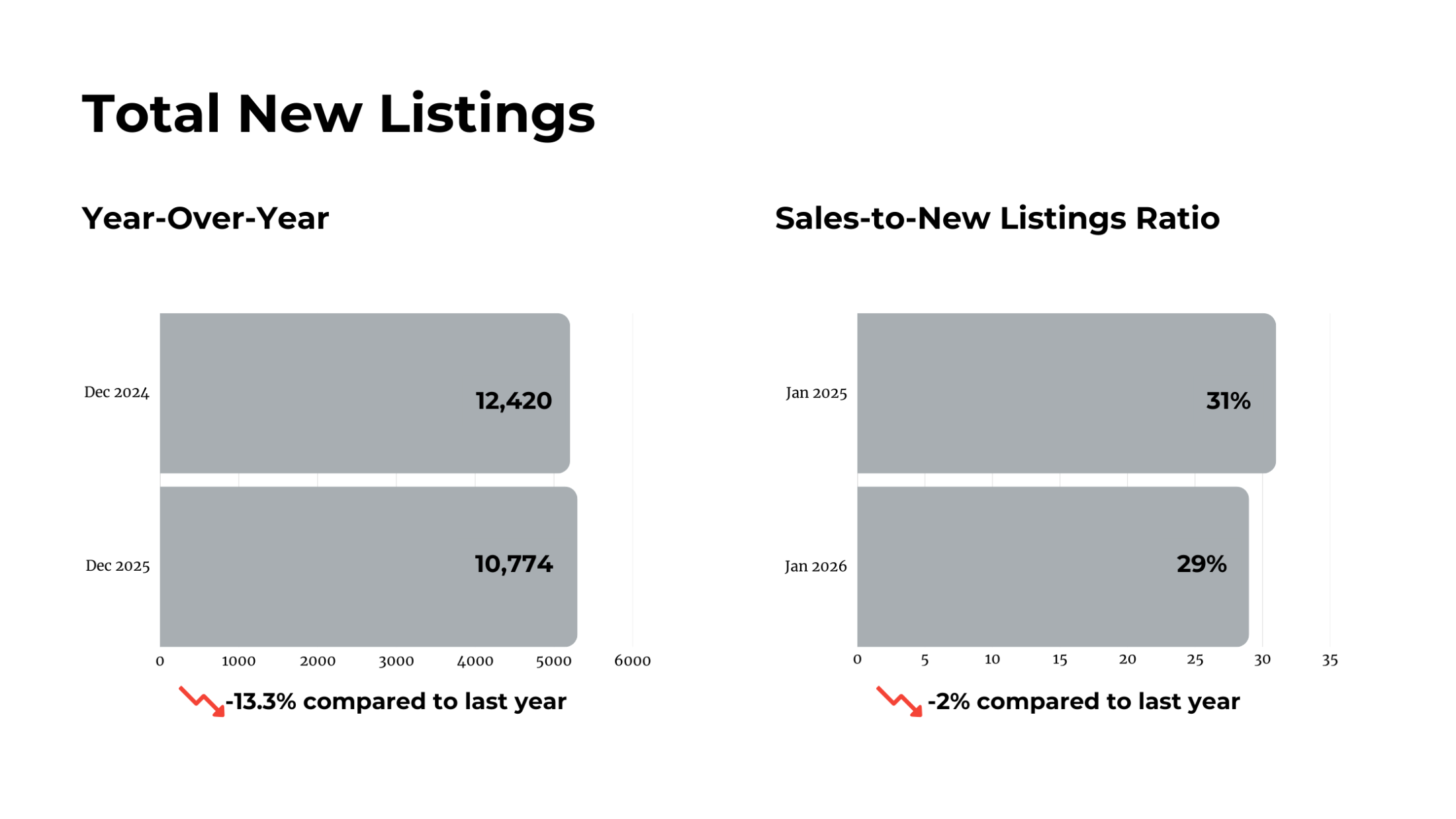
  • New Listings: 10,774 (down 13.3% year‑over‑year)

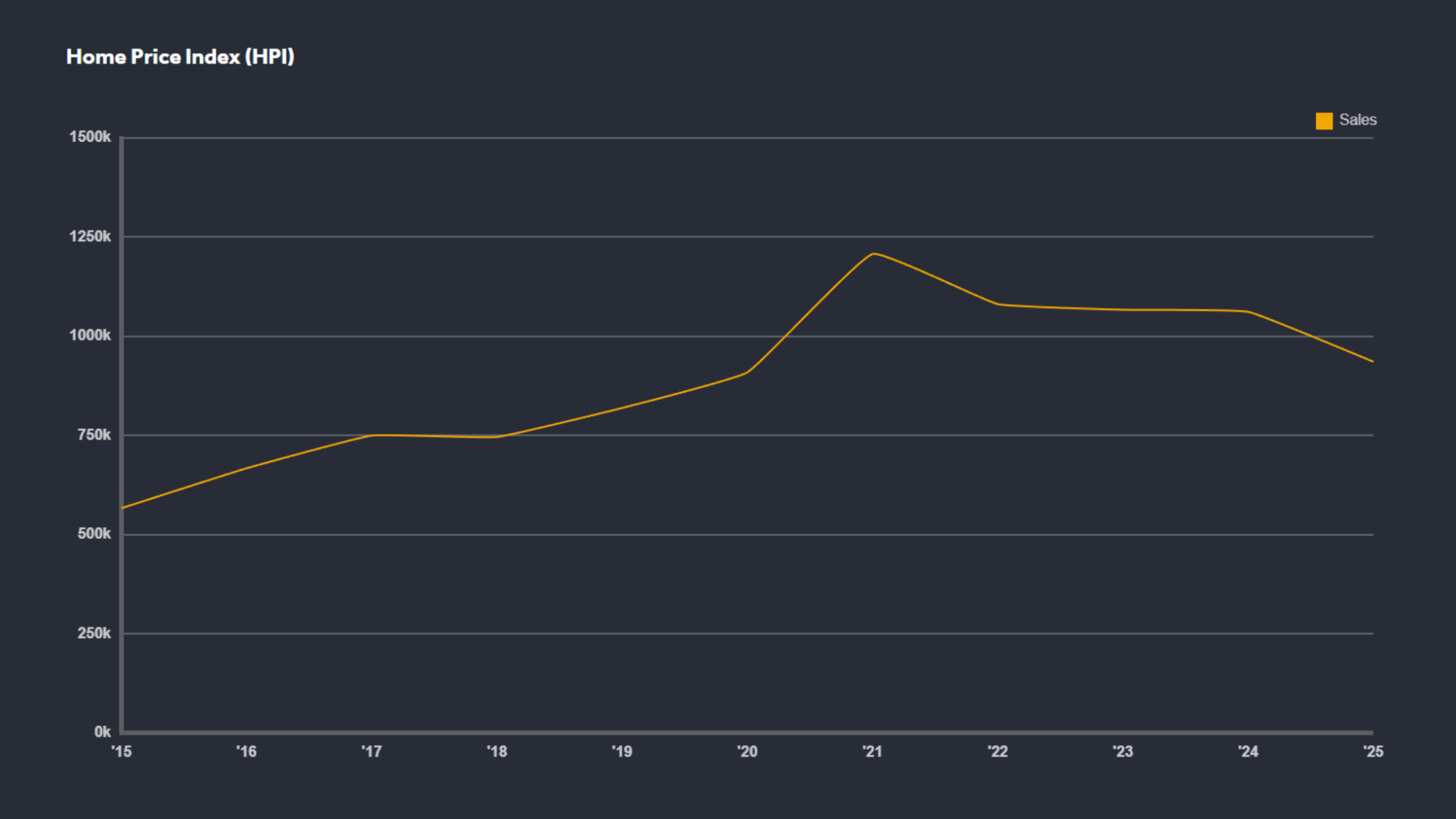
  • MLS® HPI Benchmark: down approximately 8% year‑over‑year

Sales activity slowed more sharply than new listings, reflecting cautious buyer sentiment amid ongoing economic uncertainty. However, pricing adjustments have been gradual rather than abrupt, signalling a market that is stabilizing rather than under stress.


What’s Driving the Market Right Now

1. Buyer Caution Remains a Key Theme

Entering 2026, many buyers continue to take a wait‑and‑see approach. Concerns around job security, cost of living, and broader economic conditions have tempered urgency — particularly in higher‑priced segments of the market. This has resulted in longer decision cycles and fewer competitive bidding situations.

2. Affordability Has Improved, But Confidence Lags

One of the most notable shifts coming out of 2025 was improving affordability, driven by price adjustments and more stable borrowing conditions. While this has meaningfully improved purchasing power, confidence has not yet fully returned. As history shows, affordability improvements often lead demand — but with a delay.

3. Inventory Is Rebalancing

Although new listings were lower year‑over‑year in January, inventory levels remain more balanced compared to recent peak years. Sellers are facing a more discerning buyer pool, leading to more realistic pricing strategies and renewed importance of preparation, presentation, and positioning.


Insights from the 2026 TRREB Market Outlook

The 2026 TRREB Market Outlook & Year in Review reinforces several important themes shaping the year ahead:

  • A Gradual Recovery, Not a Rapid Rebound: Market improvement is expected to be incremental, tied closely to economic stability and employment confidence.

  • Pent‑Up Demand Is Building: Many households delayed moves in 2024 and 2025. Once confidence improves, this demand is expected to re‑enter the market.

  • Condos and Entry‑Level Homes Remain Sensitive: These segments continue to feel affordability pressures but may benefit most quickly as conditions stabilize.

  • Commercial and Investment Activity Remains Selective: Investors are focused on fundamentals — cash flow, location quality, and long‑term viability — rather than short‑term appreciation.

Overall, TRREB’s outlook points toward a more balanced market environment in 2026, with healthier negotiating conditions and fewer extremes on either side.


What This Means for Buyers in 2026

For buyers, today’s market offers conditions that haven’t been available in years:

  • More choice and less competition

  • Greater leverage during negotiations

  • Fewer pressure‑driven decisions

Prepared buyers who understand neighbourhood‑level pricing and act strategically are well‑positioned to benefit as the market continues to normalize.


What This Means for Sellers

Sellers in 2026 must adjust expectations and strategies:

  • Accurate pricing is critical

  • Presentation and marketing matter more than ever

  • Homes that are well‑positioned continue to sell, even in slower conditions

While the market no longer rewards optimism‑based pricing, it does reward clarity, preparation, and professional guidance.


Looking Ahead: A Market Defined by Balance

January 2026 reinforces a key message: the GTA housing market is not in decline — it is recalibrating. With improved affordability, evolving inventory levels, and pent‑up demand waiting on the sidelines, the foundation for gradual recovery is forming.

As always, real estate outcomes remain highly localized. Understanding how these broader trends translate at the neighbourhood and property‑type level will be essential for anyone considering a move in 2026.


If you’re quietly watching the market or planning ahead this year, staying informed — not reactive — will be your biggest advantage.

Read

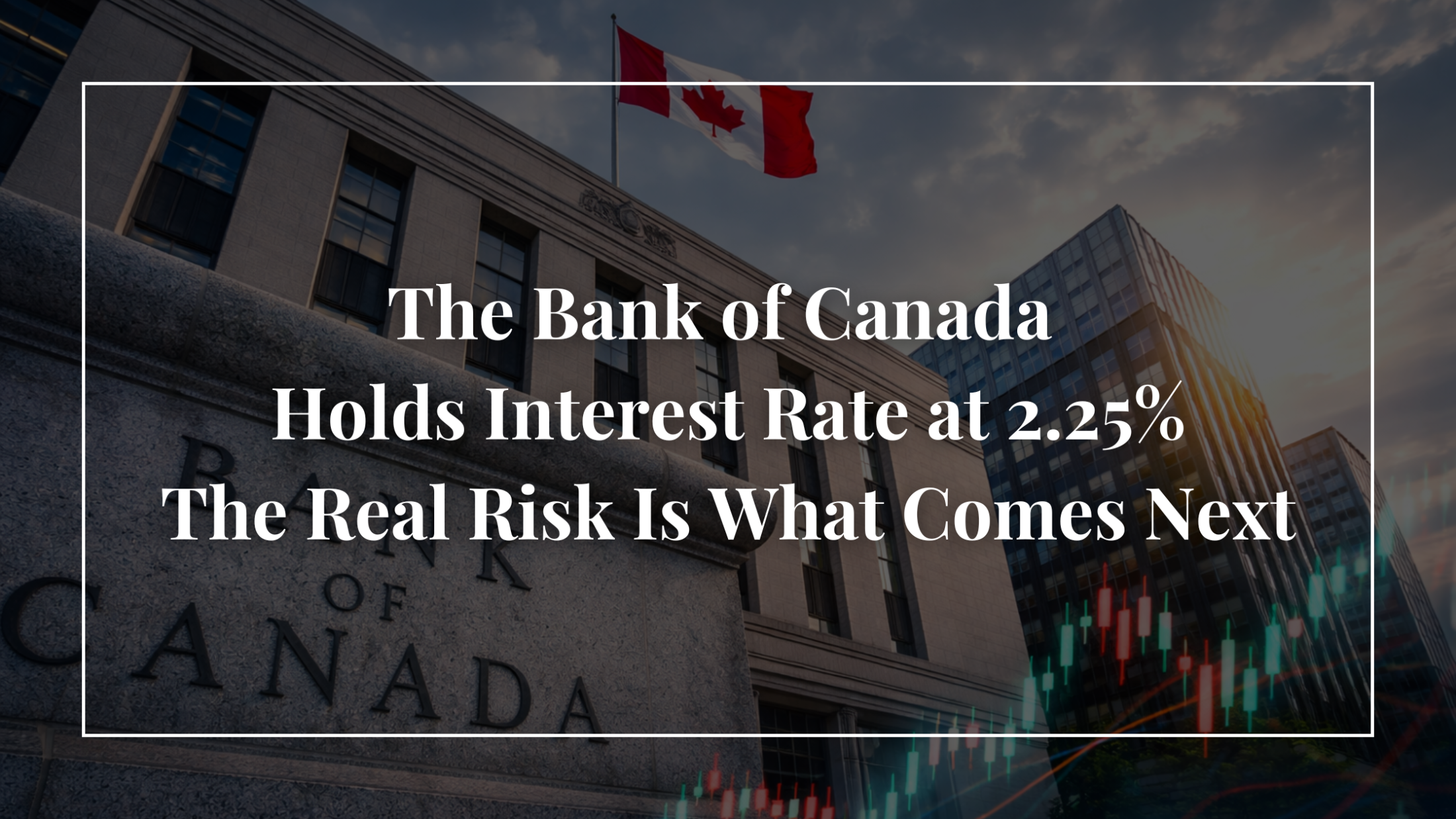
Bank of Canada Holds Interest Rate at 2.25% — The Real Risk Is What Comes Next

If you’ve been waiting for clarity on interest rates before making a real estate move in the Greater Toronto Area, the Bank of Canada’s latest decision offers some reassurance—and a few important signals to watch closely.

The Bank of Canada has held its key interest rate at 2.25% for the second consecutive meeting, confirming that rates remain at a level it believes is appropriate to keep inflation near its 2% target. While the overall economic outlook hasn’t changed significantly since late 2025, growing uncertainty—particularly around U.S. trade policy—could influence where rates go next.

So what does this mean if you’re buying, selling, or investing in GTA real estate in 2026? Let’s break it down.


Interest Rates Are Stable—for Now

For homeowners and buyers across Toronto, the Bank’s decision signals continued rate stability in the near term.

Governor Tiff Macklem emphasized that while inflation is cooling and domestic spending is improving, economic uncertainty remains elevated. As a result, the Bank is comfortable keeping rates where they are—but is ready to respond if conditions shift.

If you’re planning to buy or refinance, today’s rate environment offers predictability that we haven’t seen in years.


Trade Uncertainty Could Shape the Housing Market

One of the biggest risks flagged by the Bank of Canada is the upcoming CUSMA (Canada–U.S.–Mexico Agreement) review. Ongoing U.S. tariffs and unpredictable trade policy are weighing on Canadian exports and business confidence.

Why does this matter for real estate?

  • Slower economic growth can reduce buyer confidence

  • Businesses may delay expansion or hiring

  • Investors tend to become more selective

However, history shows that GTA real estate remains resilient, especially in desirable neighborhoods with strong fundamentals, transit access, and redevelopment potential.


GTA Housing Market Outlook for 2026

The Bank of Canada is forecasting modest GDP growth:

  • 1.1% in 2026

  • 1.5% in 2027

While this suggests slower overall economic momentum, it also reinforces why interest rate cuts are more likely than hikes if conditions soften further. Many economists now believe that if rates move at all, they will move downward—not up.

For real estate buyers, this could mean:

  • Improved affordability later in the year

  • More confidence entering the spring and fall markets

  • Less pressure to “rush” before sudden rate increases

For sellers, it highlights the importance of pricing correctly and marketing strategically in a more balanced market.


Employment, Inflation & Buyer Confidence

Employment has improved slightly, but Canada’s unemployment rate remains elevated at 6.8%, and many businesses are still cautious about hiring. At the same time, inflation is stabilizing close to the Bank’s 2% target.

In practical terms:

  • Buyers are more selective and value-conscious

  • Well-priced, move-in-ready homes continue to sell

  • Luxury and investment properties need strong positioning and storytelling

This is no longer a “spray and pray” market—strategy matters more than ever.


What This Means If You’re Buying in the GTA

If you’re a buyer in the Greater Toronto Area:

  • Stable rates provide planning confidence

  • Inventory opportunities are improving

  • Negotiation power is stronger than in past peak markets

This is an excellent time to focus on long-term value, whether that’s a family home, a rental property, or a redevelopment opportunity.


What This Means If You’re Selling in the GTA

If you’re thinking of selling:

  • Buyers are active—but cautious

  • Pricing, presentation, and timing are critical

  • Homes with clear value propositions outperform

Sellers who align with current market realities are still achieving excellent results—especially in high-demand GTA neighborhoods.


A Balanced Market Favors Smart Decisions

The Bank of Canada’s rate hold confirms what many GTA real estate professionals are already seeing: a more stable, balanced market taking shape.

While trade risks and economic uncertainty remain, interest rates are stable, inflation is under control, and modest growth is expected through 2027. For buyers and sellers alike, success in 2026 will come down to informed decision-making and expert guidance.

If you’re considering a move in the Greater Toronto Area this year—whether buying, selling, or investing—having a clear strategy has never been more important.

Thinking about your next real estate move in the GTA? Let’s talk about how today’s interest rate environment can work in your favour.


Read
This website may only be used by consumers that have a bona fide interest in the purchase, sale, or lease of real estate of the type being offered via the website. The data relating to real estate on this website comes in part from the MLS® Reciprocity program of the PropTx MLS®. The data is deemed reliable but is not guaranteed to be accurate.