The Greater Toronto Area (GTA) housing market showed signs of tightening in February 2026, according to the latest report from the Toronto Regional Real Estate Board. While home sales were slightly lower compared to the same time last year, new listings declined at a much faster rate, resulting in tighter market conditions.
For buyers, sellers, and investors across the GTA, this shift signals an important trend: housing inventory is shrinking faster than buyer demand. If this continues through the spring market, competition among buyers could increase and help stabilize home prices.
GTA Home Sales in February 2026
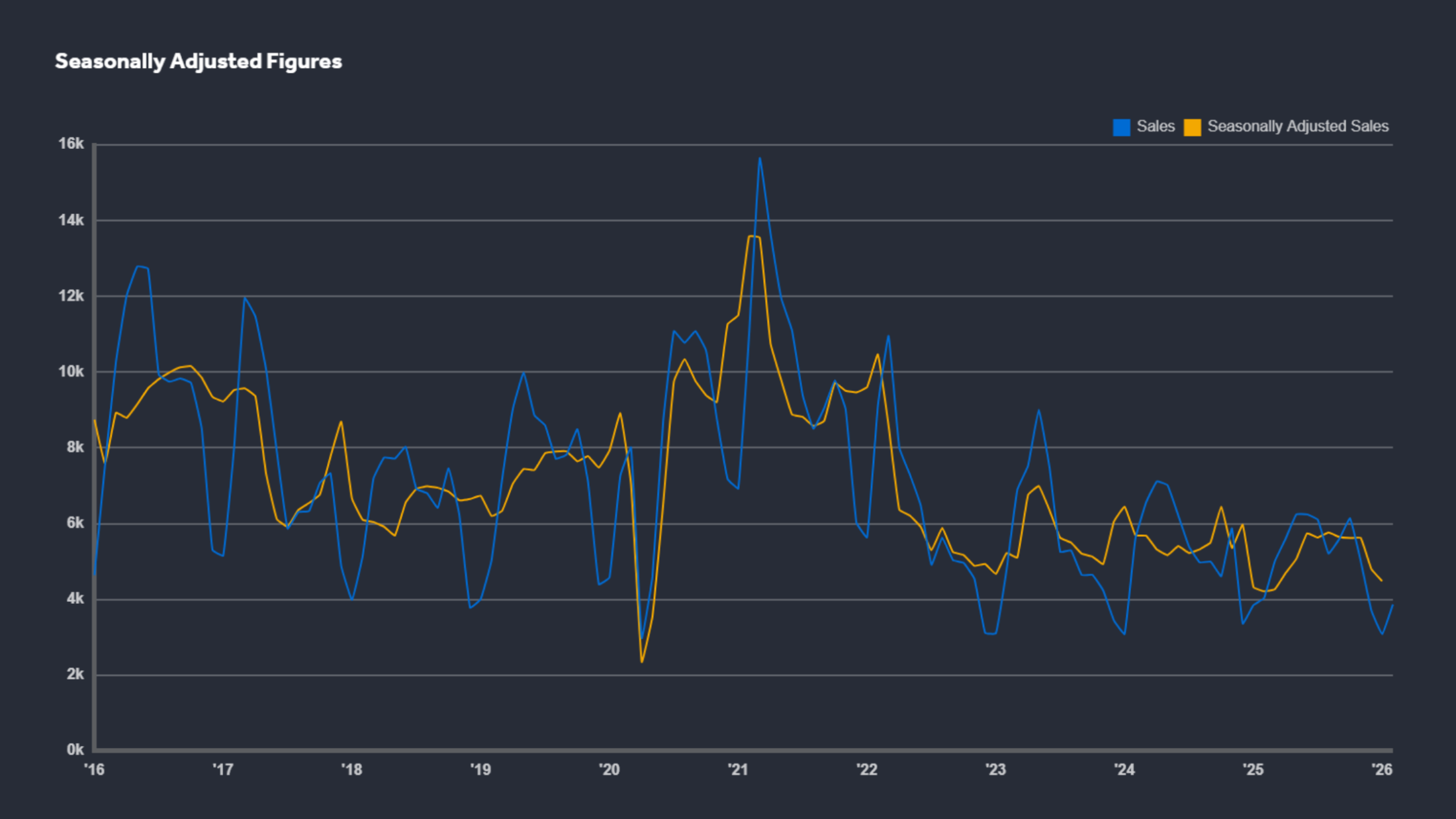
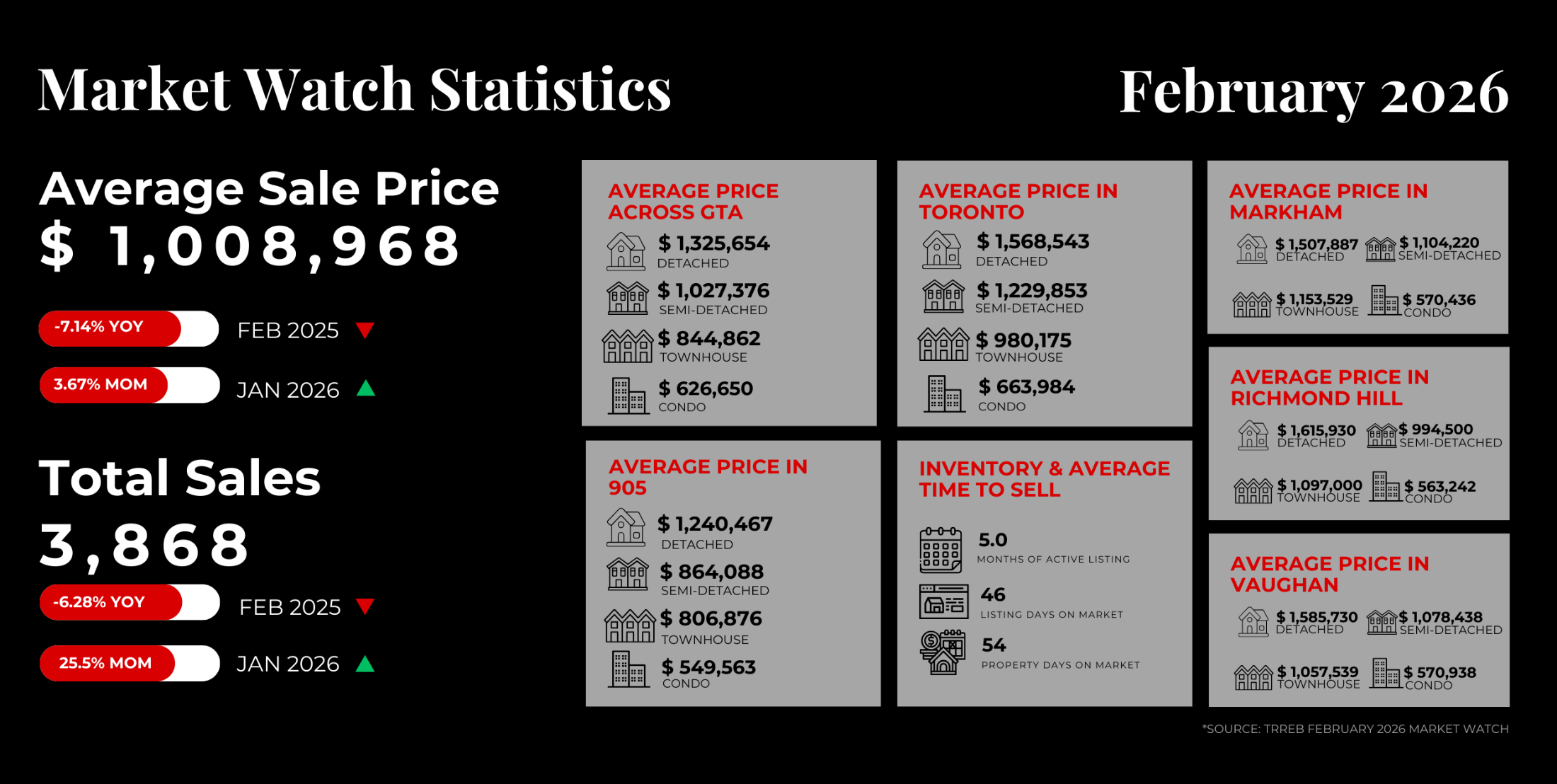
In February 2026, 3,868 homes were sold through the MLS® System, representing a 6.3% decrease compared to February 2025.
According to Daniel Steinfeld, many prospective buyers are currently taking a cautious approach.
Many buyers appear to be waiting for home prices to level off before making a purchase decision. This explains the slight decline in transactions compared to last year.
However, this does not mean demand has disappeared. Instead, many potential buyers are temporarily sitting on the sidelines while monitoring market conditions.
New Listings Declined Significantly
One of the most notable trends in the February report was the sharp drop in new listings entering the market.
A total of 10,705 new listings were added to the MLS® System, which is 17.7% lower than February 2025.
This means that housing supply is tightening more quickly than buyer demand is declining.
Recent polling conducted by Ipsos indicates that many homeowners are delaying their plans to list their properties in 2026, contributing to the lower inventory levels.
If this trend continues during the upcoming spring market — traditionally the busiest season for real estate in the GTA — buyers may face increased competition for available homes.
GTA Home Prices in February 2026
Home prices in the GTA also saw some adjustments compared to last year.
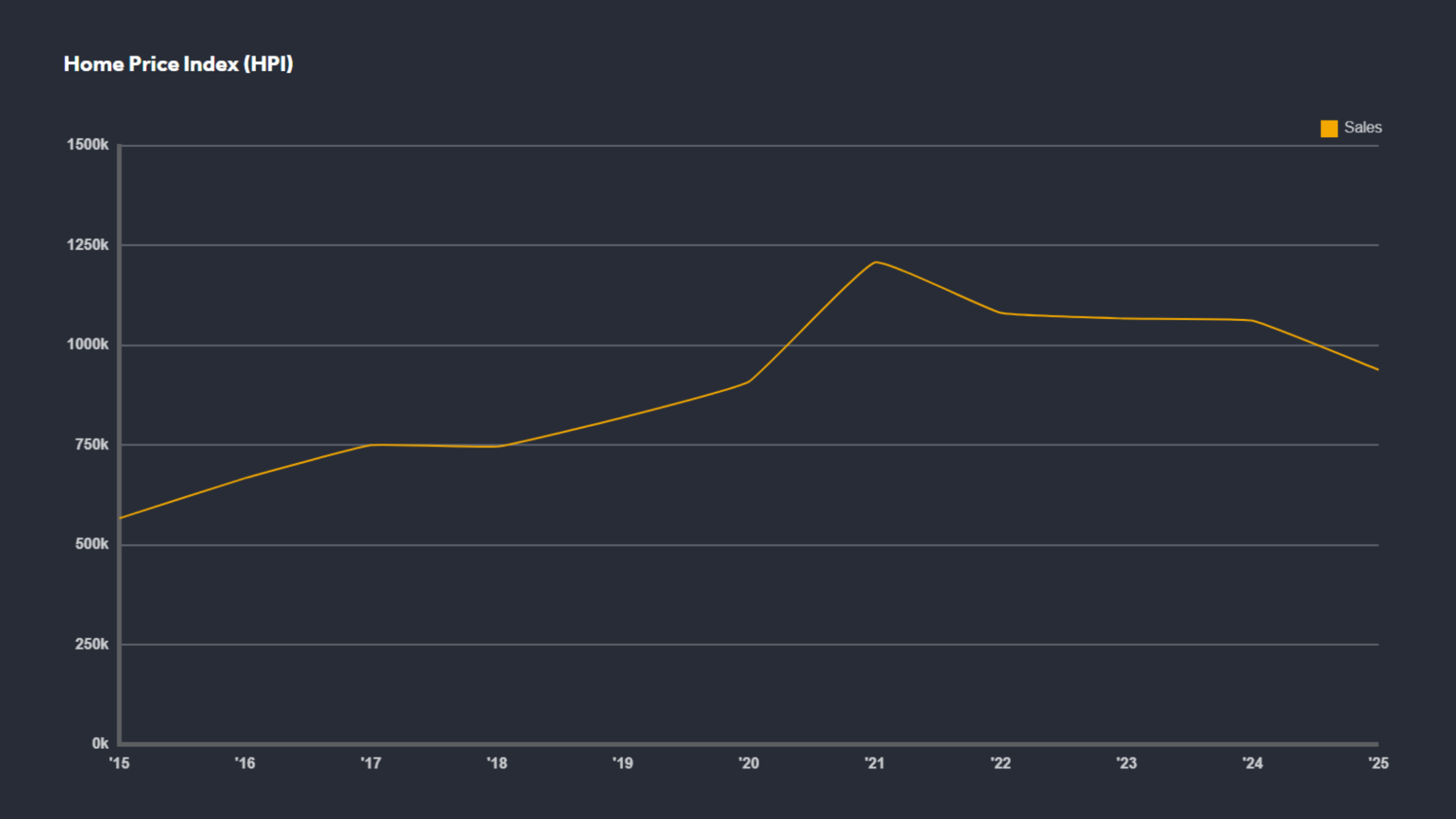
The MLS Home Price Index Composite benchmark price declined by 7.9% year-over-year.
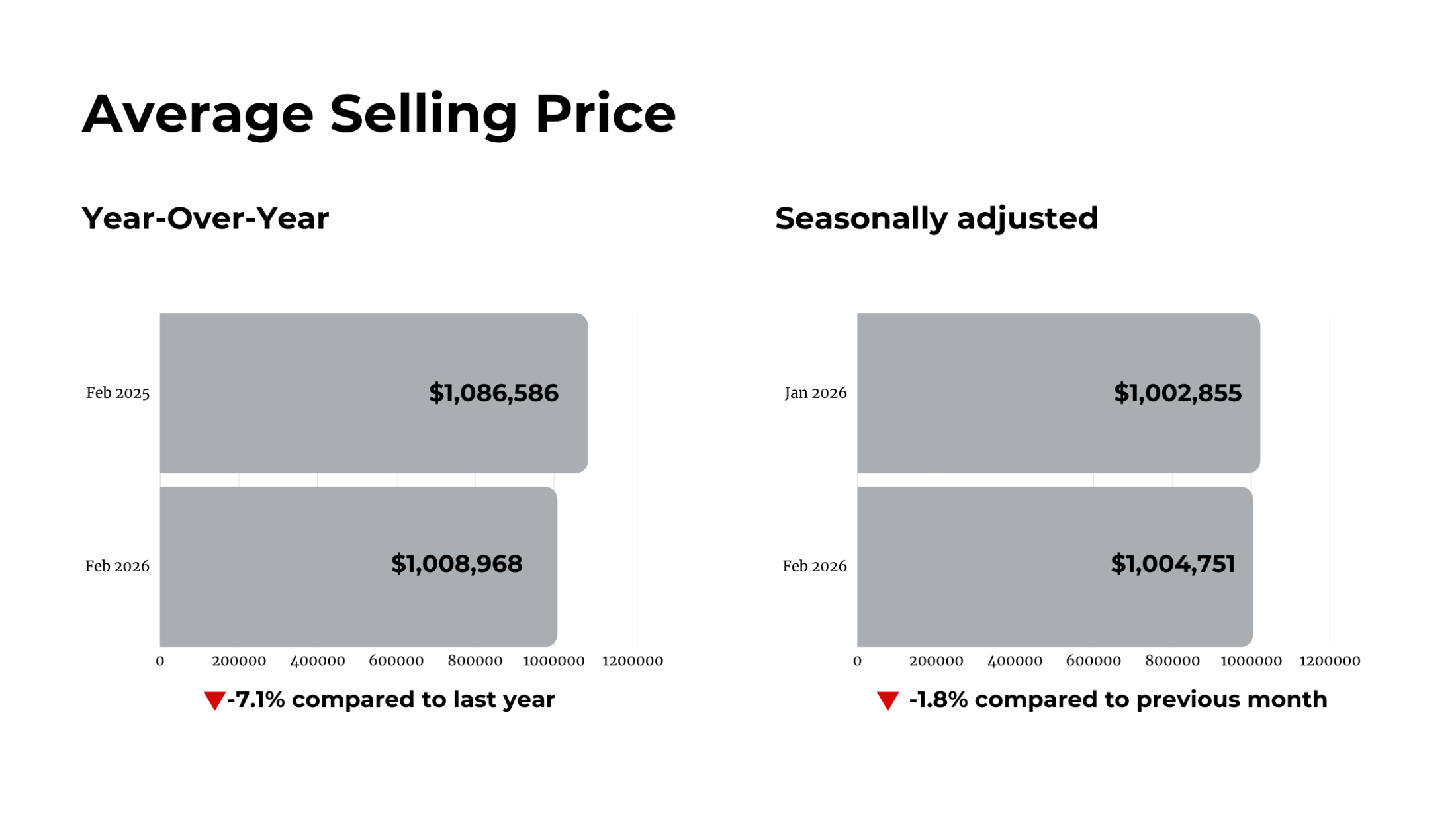
Meanwhile, the average selling price across the GTA reached $1,008,968, representing a 7.1% decrease compared to February 2025.
While prices have softened slightly, limited inventory could help stabilize prices if buyer demand strengthens later in the year.
For buyers, this may present a window of opportunity before market activity picks up again.
Pent-Up Demand Could Support Future Sales
Despite the current slowdown in transactions, demand for homeownership in the GTA remains strong.
According to Jason Mercer, there are more than 100,000 potential buyers currently waiting to enter the market.
These buyers are largely waiting for:
Once these factors improve, pent-up demand could quickly translate into stronger home sales, particularly in the second half of 2026.
The “Missing Middle” Housing Challenge
Beyond short-term market changes, industry leaders continue to emphasize the need to address the region’s housing supply challenges.
John DiMichele has highlighted the importance of increasing “missing middle” housing options across the GTA.
This refers to housing types that fall between condominium apartments and detached houses, such as:
Expanding these housing options could help improve affordability and provide more choices for buyers in the GTA housing market.
GTA Real Estate Market Outlook for 2026
The February data suggests that the GTA housing market is entering a transitional phase.
While sales and prices were slightly lower compared to last year, the significant drop in new listings may tighten supply and support prices moving forward.
If buyer confidence improves and more of the 100,000 waiting buyers re-enter the market, the GTA could see stronger home sales activity later in 2026 and into 2027.
The February 2026 GTA housing market report shows a market adjusting to evolving conditions. Sales were down 6.3% year-over-year, but the 17.7% drop in new listings suggests that supply is tightening faster than demand.
With more than 100,000 buyers waiting on the sidelines, limited inventory could eventually lead to increased competition and stronger home sales in the months ahead.
As the year progresses, the balance between supply, demand, and economic confidence will continue to shape the future of the Greater Toronto Area housing market.
Subscribe to my newsletter to receive exclusive market updates, neighbourhood insights, and opportunities directly in your inbox.