The Greater Toronto Area (GTA) housing market continued its gradual shift in July 2026, with tighter market conditions becoming more evident as the summer progressed.
While overall home sales remained relatively stable compared to a year ago, the supply of new listings declined sharply. As a result, buyers are beginning to face more competition, and the negotiating advantages seen earlier this year may slowly begin to narrow.
For anyone following the Toronto real estate market, July reinforces a trend that has been building for several months: inventory is shrinking, buyer activity is holding steady, and market balance is gradually changing.
GTA Home Sales Remain Resilient Despite Economic Uncertainty
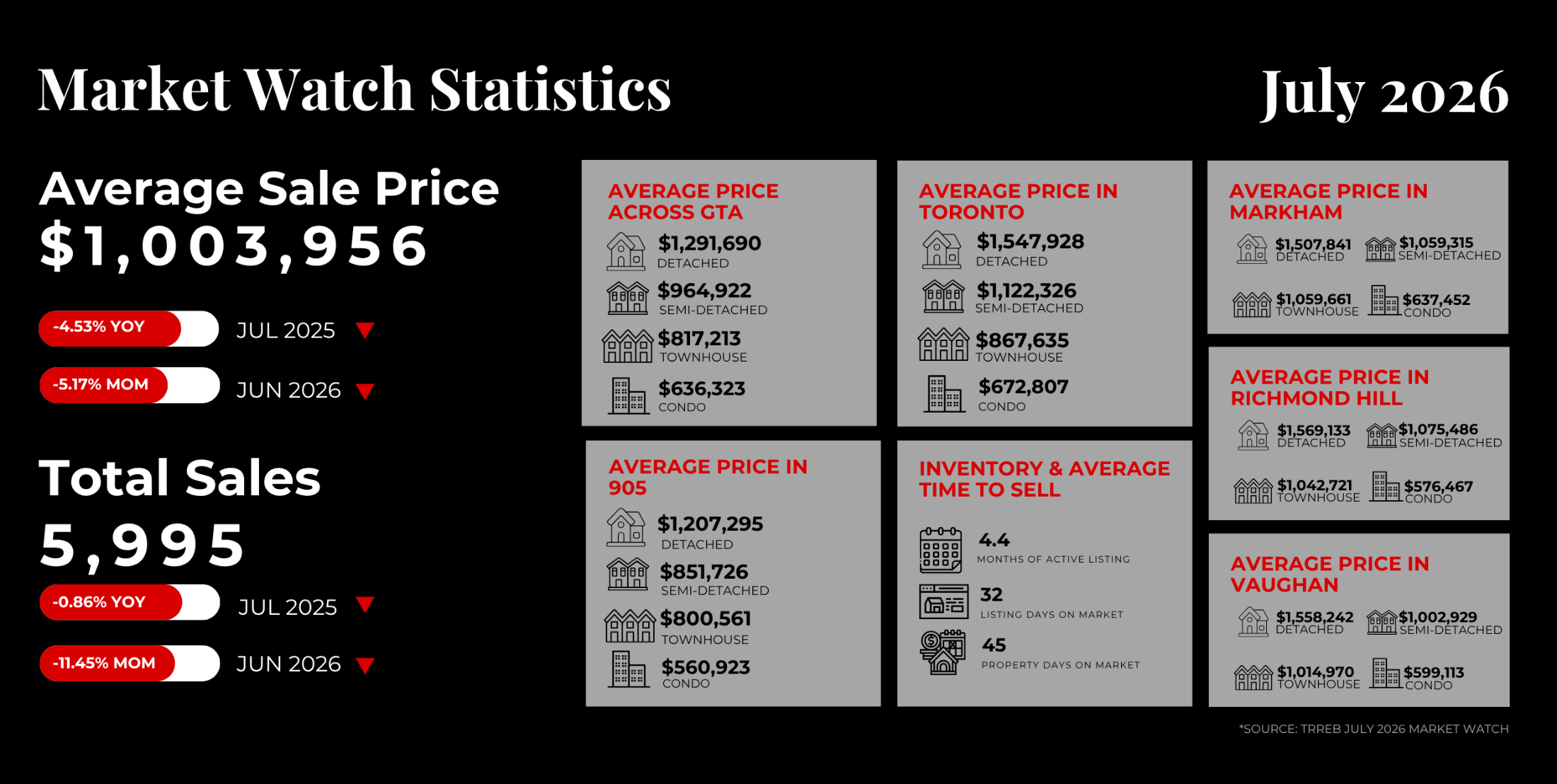
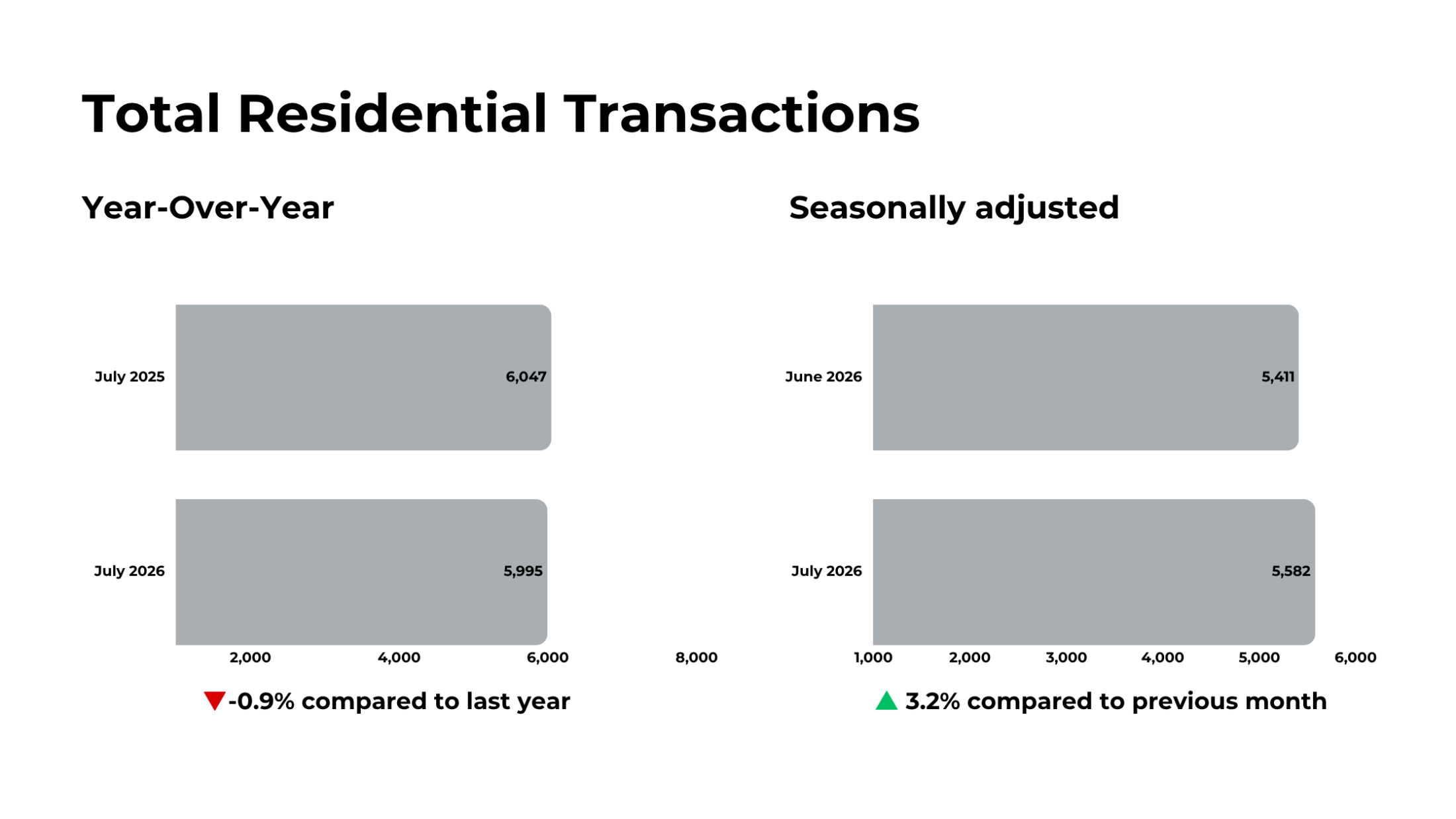
According to the Toronto Regional Real Estate Board (TRREB), 5,995 homes were sold across the GTA in July 2026, just 0.9% lower than July 2025.
While sales were essentially flat year over year, the more significant change came from the supply side.
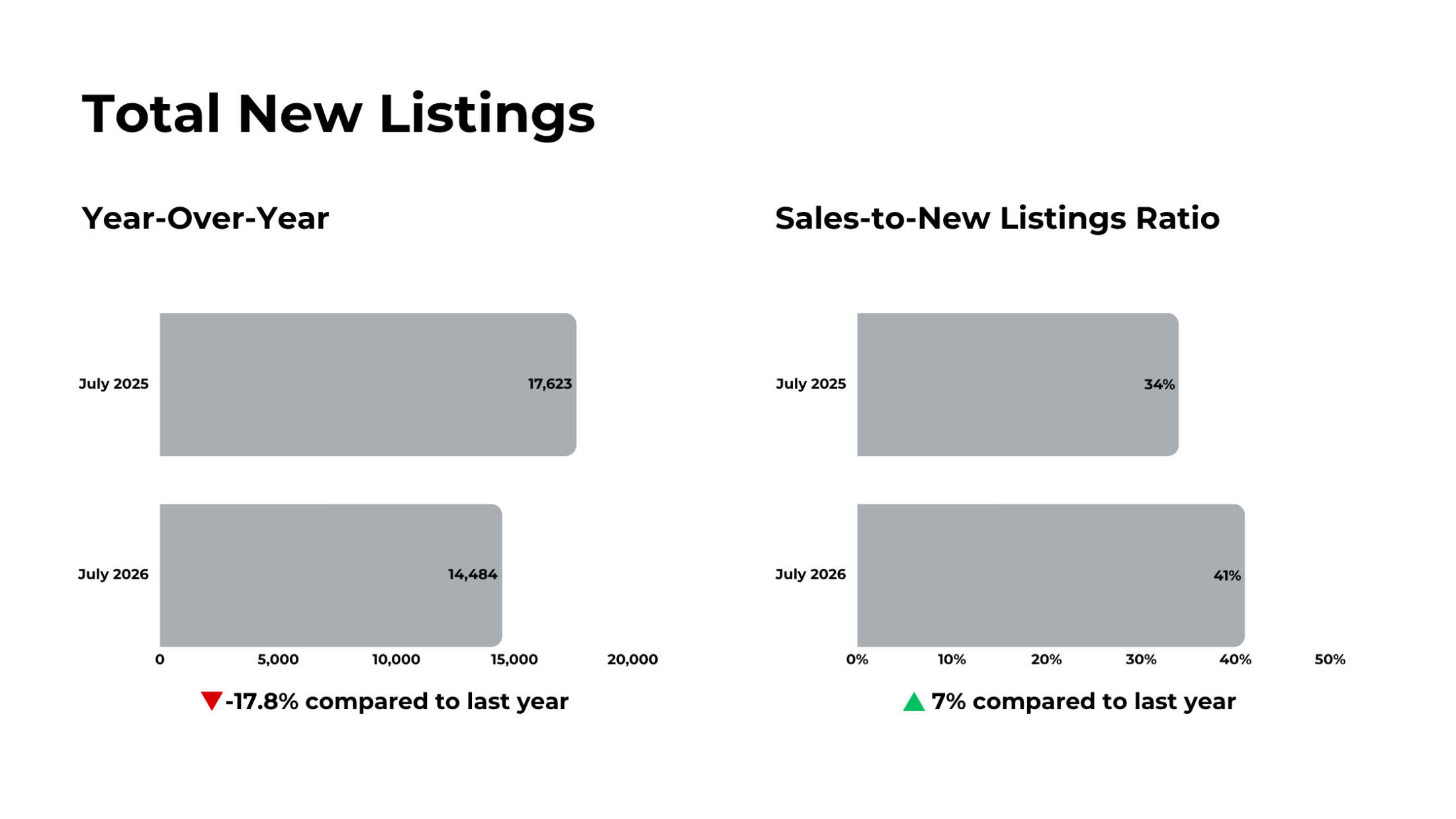
Only 14,484 new listings entered the MLS® System during the month, representing a 17.8% decline compared to last year.
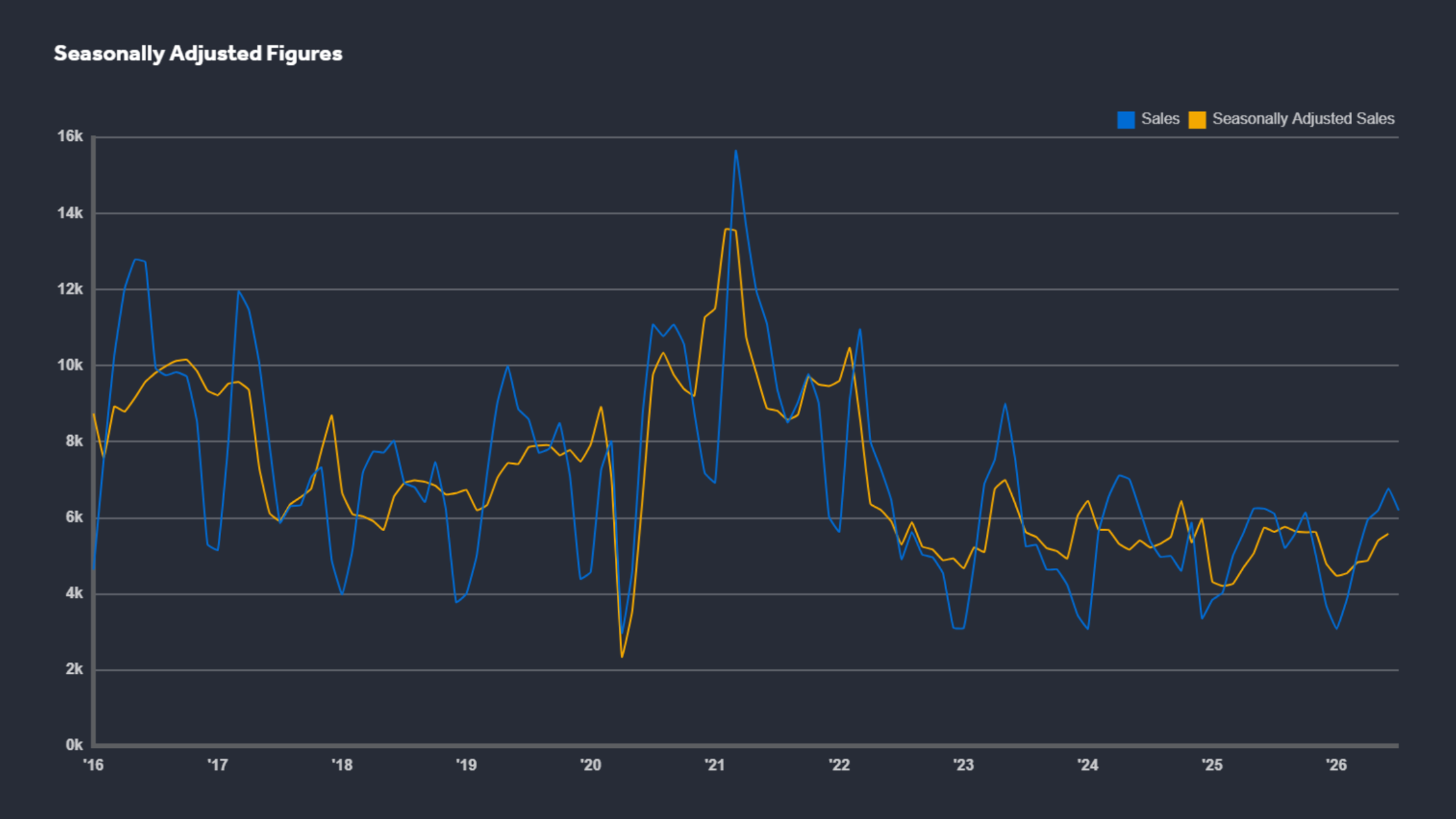
Seasonally adjusted data also showed that home sales increased compared to June while new listings declined again, continuing the tightening trend seen throughout the summer.
This means that active buyers are competing over fewer available homes—a dynamic that often supports stronger pricing over time.
GTA Home Prices Continue to Stabilize
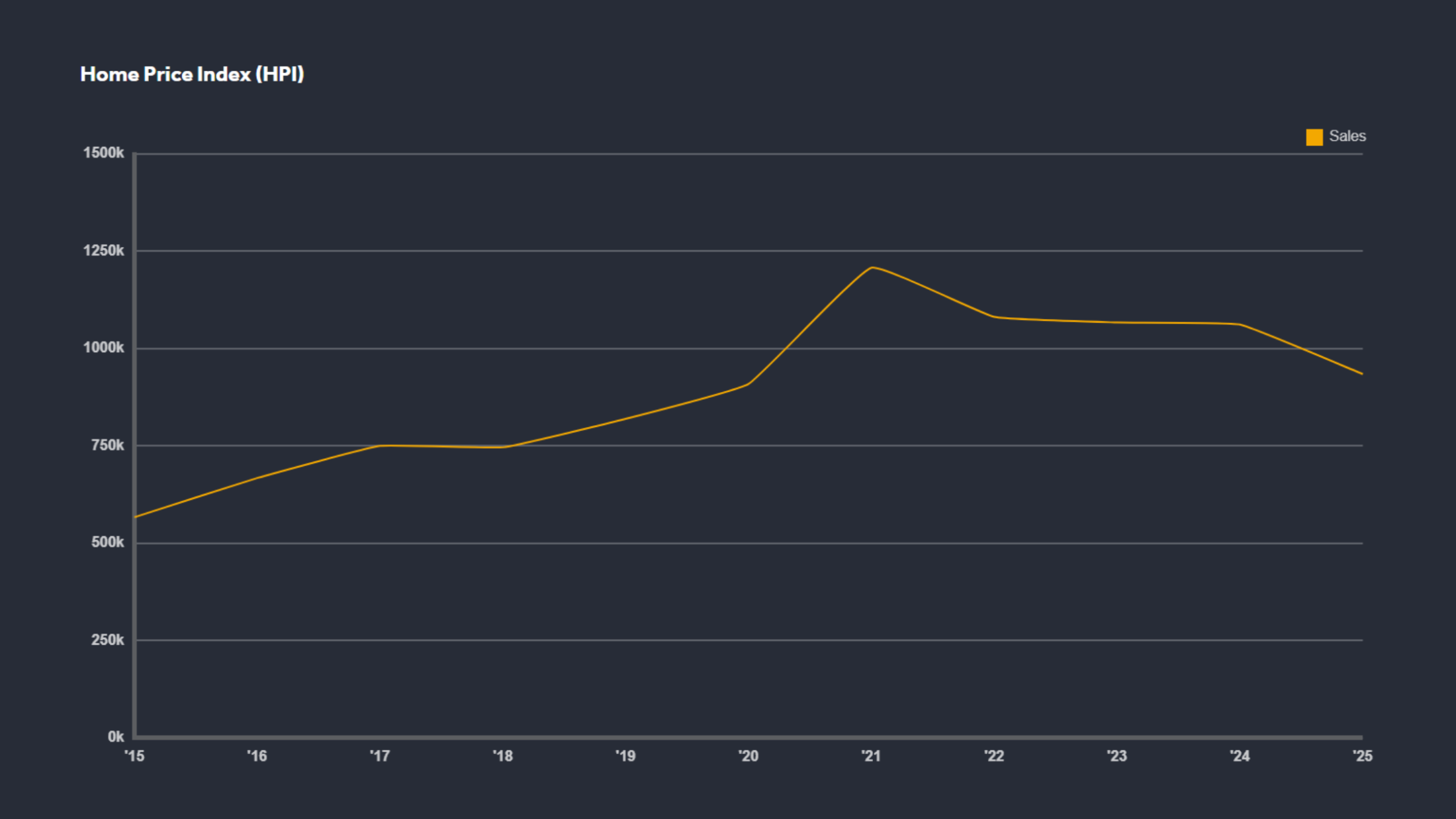
Although prices remain below last year's levels, the pace of decline continues to moderate.
July 2026 Market Statistics:
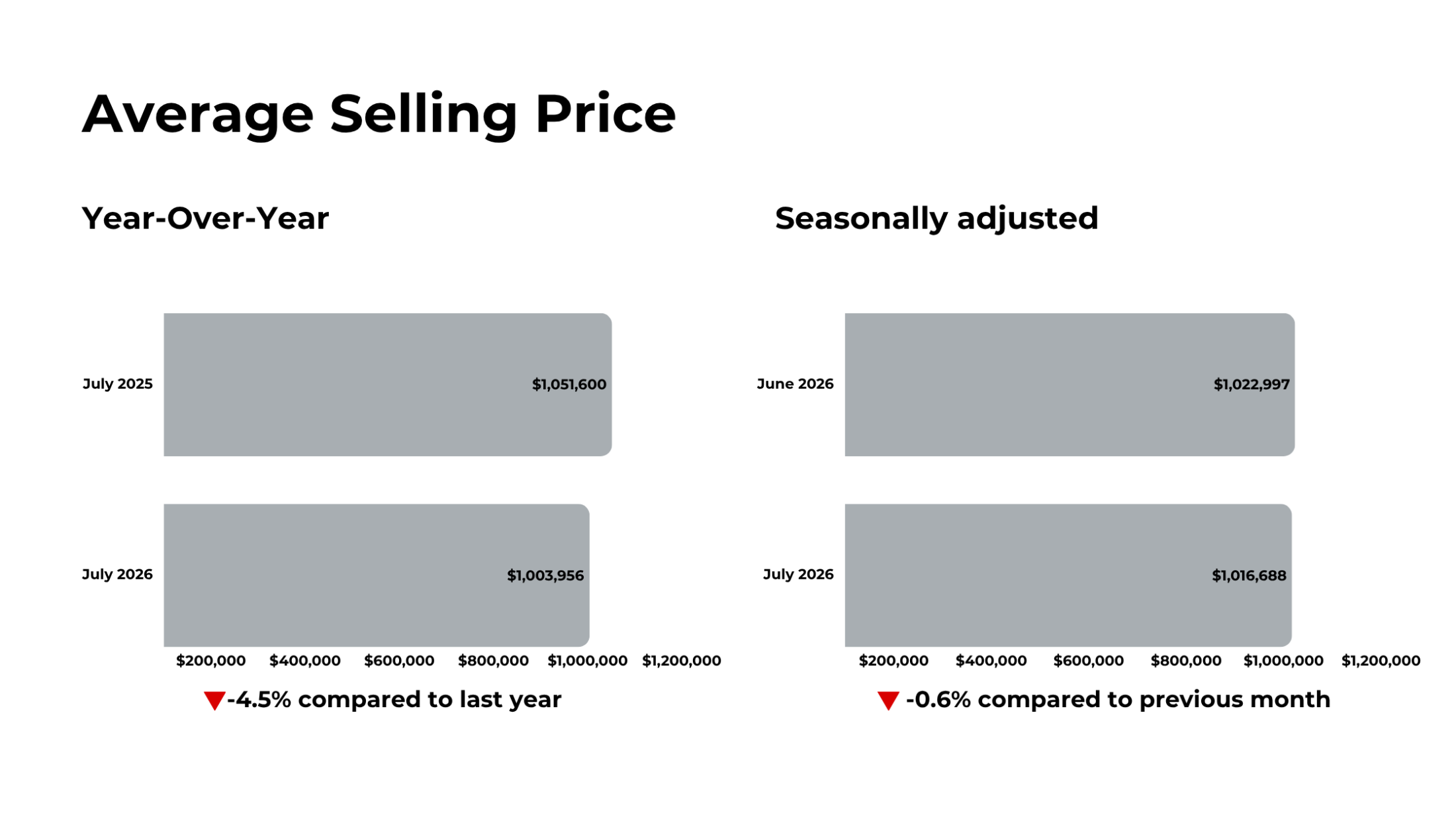
Average Home Price: $1,003,956
Average Selling Price: Down 4.5% year over year
MLS® Home Price Index: Down 4.6% year over year
On a seasonally adjusted basis, the MLS® HPI edged slightly higher compared to June, while the average selling price remained relatively stable.
Rather than pointing to further price weakness, these figures suggest the market may be approaching a more balanced environment.
What This Means for GTA Buyers
Buyers continue to benefit from improved affordability compared to recent years, but conditions are beginning to change.
With fewer homes entering the market, buyers may have fewer opportunities to negotiate than they did earlier this year.
Economic uncertainty—including inflation, borrowing costs, and global trade concerns—continues to influence purchasing decisions. However, stronger-than-expected employment and economic data could encourage more buyers to return to the market if confidence continues improving.
Those planning to purchase later this year may want to watch inventory levels closely, as tighter supply could gradually increase competition.
What This Means for GTA Sellers
The market is becoming more encouraging for sellers.
Although pricing has not fully recovered, declining inventory means well-presented and appropriately priced homes may attract greater buyer interest than they did earlier in the year.
Success still depends on pricing strategy, location, and property condition, but improving supply-demand balance is creating more favourable conditions for many sellers.
Housing Supply Remains a Long-Term Challenge
Beyond monthly statistics, TRREB continues to emphasize the importance of improving housing affordability by addressing municipal barriers to new housing.
Restrictive zoning, lengthy approval processes, and rising development costs continue to add significant expenses to new housing construction across the GTA.
Reducing these barriers remains an important part of improving long-term housing affordability for future buyers.
July 2026 GTA Market Snapshot
Average Home Price: $1,003,956 (↓ 4.5% YoY)
Home Sales: 5,995 (↓ 0.9% YoY)
New Listings: 14,484 (↓ 17.8% YoY)
MLS® HPI Composite Benchmark: (↓ 4.6% YoY)
Month-over-Month: Sales increased while new listings declined, signalling continued tightening through the summer.
Looking Ahead
The GTA housing market continues to move toward greater balance.
While buyers still have opportunities, the combination of declining inventory and steady demand suggests market conditions could become more competitive as we head into the fall.
If buyer confidence continues to improve and listing inventory remains limited, home prices may begin to stabilize further in the months ahead.
As always, every neighbourhood tells a different story. Understanding how these broader market trends affect your local community is the key to making confident real estate decisions, whether you're buying, selling, or simply planning your next move.