
Latest Blog Posts

GTA Home Sales Fall 9% in September as Buyers Remain Cautious

Posted by Paul Lee on Oct 15, 2026

September 2026 TTREB Market Watch Report

Toronto Land Transfer Tax Relief? A Major Housing Proposal That Could Save Buyers Up to $18,000

Posted by Paul Lee on Oct 01, 2026

A Major Housing Proposal That Could Save Buyers Up to $18,000

August 2026 GTA Housing Market Update | Toronto Real Estate

Posted by Paul Lee on Sep 10, 2026

GTA Real Estate Market Update

July 2026 GTA Housing Market Update: Inventory Tightens as Buyer Competition Grows

Posted by Paul Lee on Aug 26, 2026

The Greater Toronto Area (GTA) housing market continued its gradual shift in July 2026, with tighter ...

June 2026 GTA Housing Market Update: Toronto Home Sales Rise as Listings Fall—Is the Market Shifting Again?

Posted by Paul Lee on Jul 10, 2026

Toronto and GTA home sales rose 9.4% in June 2026 while new listings declined. See what the latest TRREB ...

GTA Housing Market Update May 2026: Home Sales Rise as Listings Decline

Posted by Paul Lee on Jun 10, 2026

The Greater Toronto Area housing market continued to show signs of recovery in May 2026, with home sales ...

RSS

June 2025 Real Estate Report: Prices Down, Listings Up in the GTA

Affordability improves, but uncertainty lingers. Here’s what homebuyers and investors need to know.

If you've been sitting on the fence about entering the Greater Toronto Area real estate market, you’re not alone. June 2025 saw some interesting developments that could tip the scales for buyers but it's not as straightforward as just price drops or lower rates.

Whether you're a first-time buyer looking to secure your starter home, or an investor waiting for the right conditions to expand your portfolio, this month’s market snapshot is worth a closer look.

Let’s break down what’s happening, why it matters, and what it could mean for your next move in real estate.

✅ Affordability is Improving — But Caution Remains
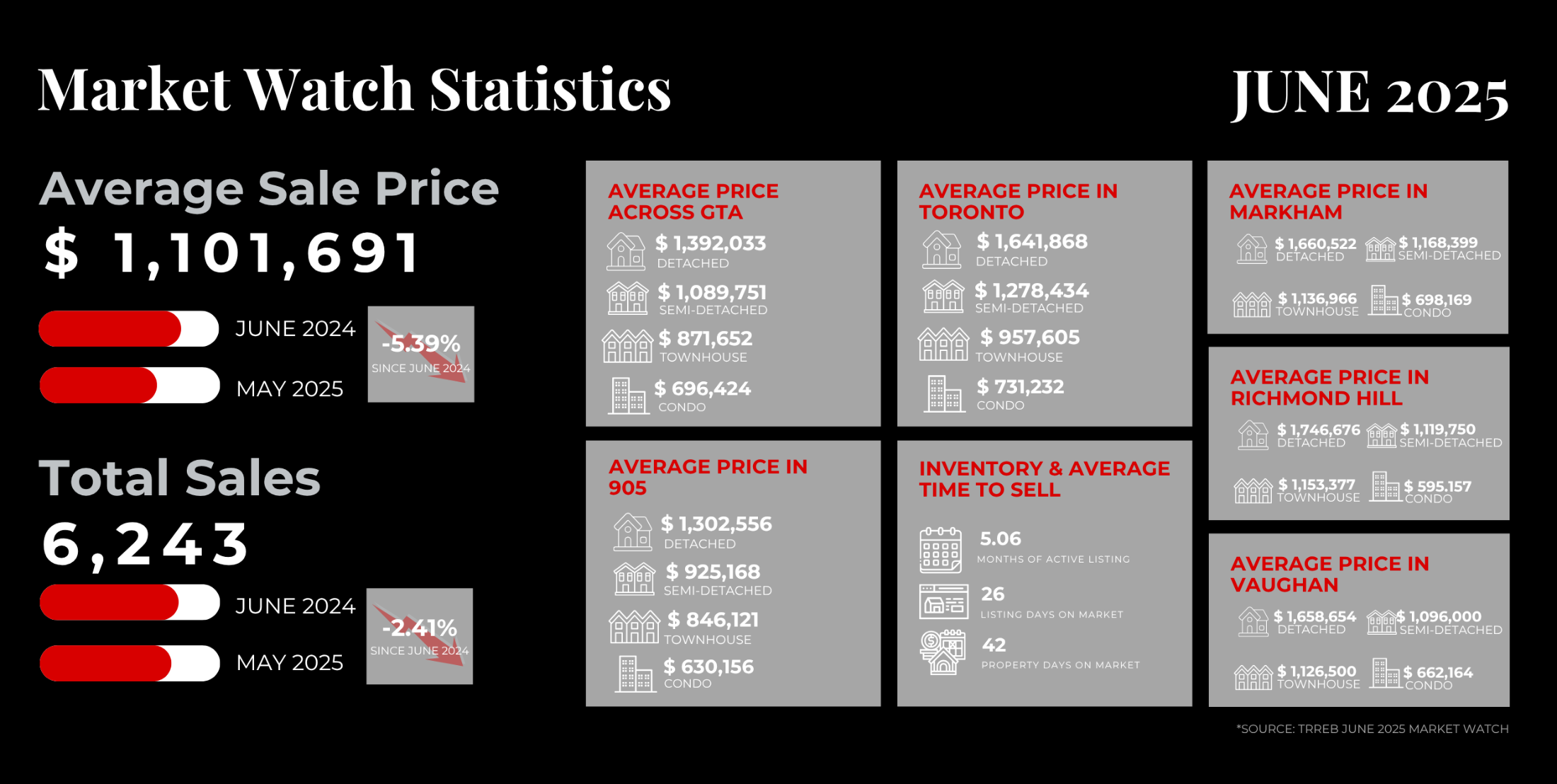
Good news first: housing affordability continued to improve in June 2025.

That’s largely thanks to two things:

  • Lower average selling prices compared to this time last year

  • Reduced borrowing costs (interest rates aren’t as punishing as they were in 2024)

The average GTA home sold for $1,101,691 in June, which is 5.4% lower year-over-year. This drop, combined with easing mortgage rates, means that monthly payments are becoming more manageable for many households.

But here’s the twist: despite these improvements, many potential buyers are still hesitant. Economic uncertainty ranging from trade tensions to crime and safety concerns continues to influence consumer confidence.

📉 Sales Are Down Year-over-Year, but Rising Month-to-Month

Let’s talk numbers:

  • 6,243 home sales were recorded in June, a 2.4% drop from June 2024

  • But on a seasonally adjusted basis, sales were up compared to May 2025

  • New listings rose year-over-year by 7.7%, giving buyers more choice

  • Month-over-month, however, listings actually dropped tightening inventory again

What does that mean?

There’s more selection than last year, and buyers are negotiating better deals, especially with sellers adjusting to current price trends. But fewer new listings in recent weeks could put upward pressure on prices if buyer activity picks up.

🧠 What This Means for Buyers and Investors

🏠 First-Time Buyers:

This could be the window of opportunity you've been waiting for.

With more room to negotiate and slightly lower prices, you have a better chance of entering the market before it heats up again. Just keep in mind that economic uncertainty still lingers, so make sure your financial foundation is solid before diving in.

💼 Investors:

Lower prices and more supply could signal smart buying opportunities especially if you’re looking to flip or rent. But remember: the market isn’t booming just yet. You may need to play the long game for returns, especially if you’re eyeing appreciation-based gains.

💬 Looking Ahead: What Could Shift the Market Next?

According to TRREB’s Chief Information Officer, two additional interest rate cuts and improved U.S.-Canada trade relations could give the market a significant boost. Lower borrowing costs would make homeownership even more attainable, potentially increasing competition and raising prices again.

There’s also growing concern around public safety, with a spotlight on home invasions and carjackings in the GTA. While the government is working on tougher crime legislation, this issue could influence neighborhood desirability and buyer confidence in specific areas.

The GTA housing market is showing signs of steady recovery, and there are opportunities for strategic buyers and investors. But it’s not a free-for-all—uncertainty still plays a big role in decision-making.

If you’re thinking about buying, stay informed, assess your risk tolerance, and work with professionals who understand the current landscape. The rest of 2025 could bring more shifts—so be ready to move when the time is right.

Want more GTA market insights like this?

Subscribe to our newsletter and stay ahead of real estate trends, property tips, and investment opportunities delivered straight to your inbox.

Read

May 2025 GTA Housing Market Update: More Inventory, Lower Prices, and Buyer-Friendly Conditions

The Greater Toronto Area (GTA) real estate market showed more signs of change in May 2025, offering improved affordability and greater housing inventory compared to the same time last year. While home sales were down, more listings gave buyers better choices and stronger negotiating power.

If you’ve been watching the Toronto housing market and wondering if now is a good time to buy, here’s what you need to know.

🔍 What Happened in the GTA Housing Market – May 2025

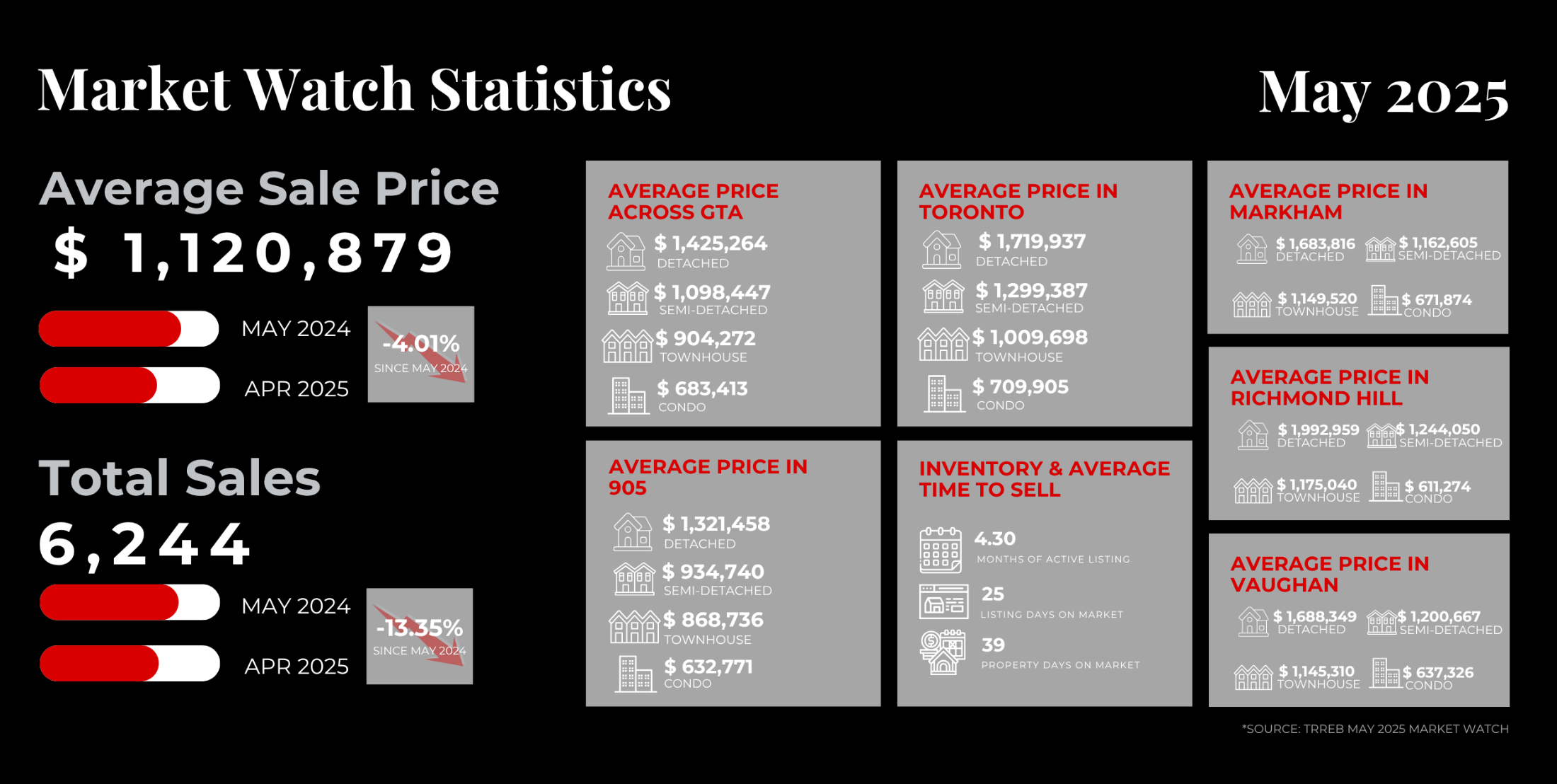
According to the Toronto Regional Real Estate Board (TRREB), there were 6,244 home sales in May 2025, which is 13.3% fewer sales compared to May 2024. However, new listings went up by 14%, reaching a total of 21,819 homes listed on the MLS® System.

This means buyers now have more options than they did last year, which helps them take their time, compare properties, and negotiate better deals.

“Homebuyers have certainly benefited from greater choice and improved affordability this year,” said TRREB President Elechia Barry-Sproule. “But each neighbourhood is different, and working with a REALTOR® who knows your area is key.”

💰 Have Home Prices Dropped in the Greater Toronto Area?

Generally speaking, yes. Average prices have come down a bit. The average across the GTA was $1,120,879 in May 2025—down 4% year-over-year. The MLS® Home Price Index, which measures home value trends more accurately than averages alone, also dropped 4.5% compared to May 2024. Not all property types and areas are equal with some doing better then others.

However, compared to April 2025, both prices and sales slightly increased month-over-month, showing early signs of stability in the market.

📉 Why Are Sales Still Down?

You might wonder if homes are more affordable and borrowing costs are lower than last year, why are fewer people buying?

TRREB Chief Information Officer Jason Mercer explained that the slowdown isn’t just about prices or mortgage rates—it’s about economic confidence.

“Once households feel more secure about trade stability and economic growth, home sales will likely pick up. A further drop in interest rates would also encourage more activity, especially from first-time buyers.”

🏗️ What Could Help Canada’s Housing Market?

TRREB’s leadership also called for more action from the federal government to address long-term housing affordability. Some key suggestions include:

  • Lowering housing taxes and fees

  • Encouraging innovative construction technologies

  • Speeding up the home building approval process

  • Supporting more housing development across Canada

“Home construction not only adds supply but also boosts the economy. And with inflation staying low, a rate cut would help even more,” added TRREB CEO John DiMichele.

The Toronto real estate market in May 2025 is leaning more in favor of buyers, thanks to more homes for sale and softer prices. Still, many people are cautiously waiting for better economic news or lower interest rates.

Want to stay updated on the real estate market? Subscribe to our newsletter and get the latest insights straight to your inbox.

Read

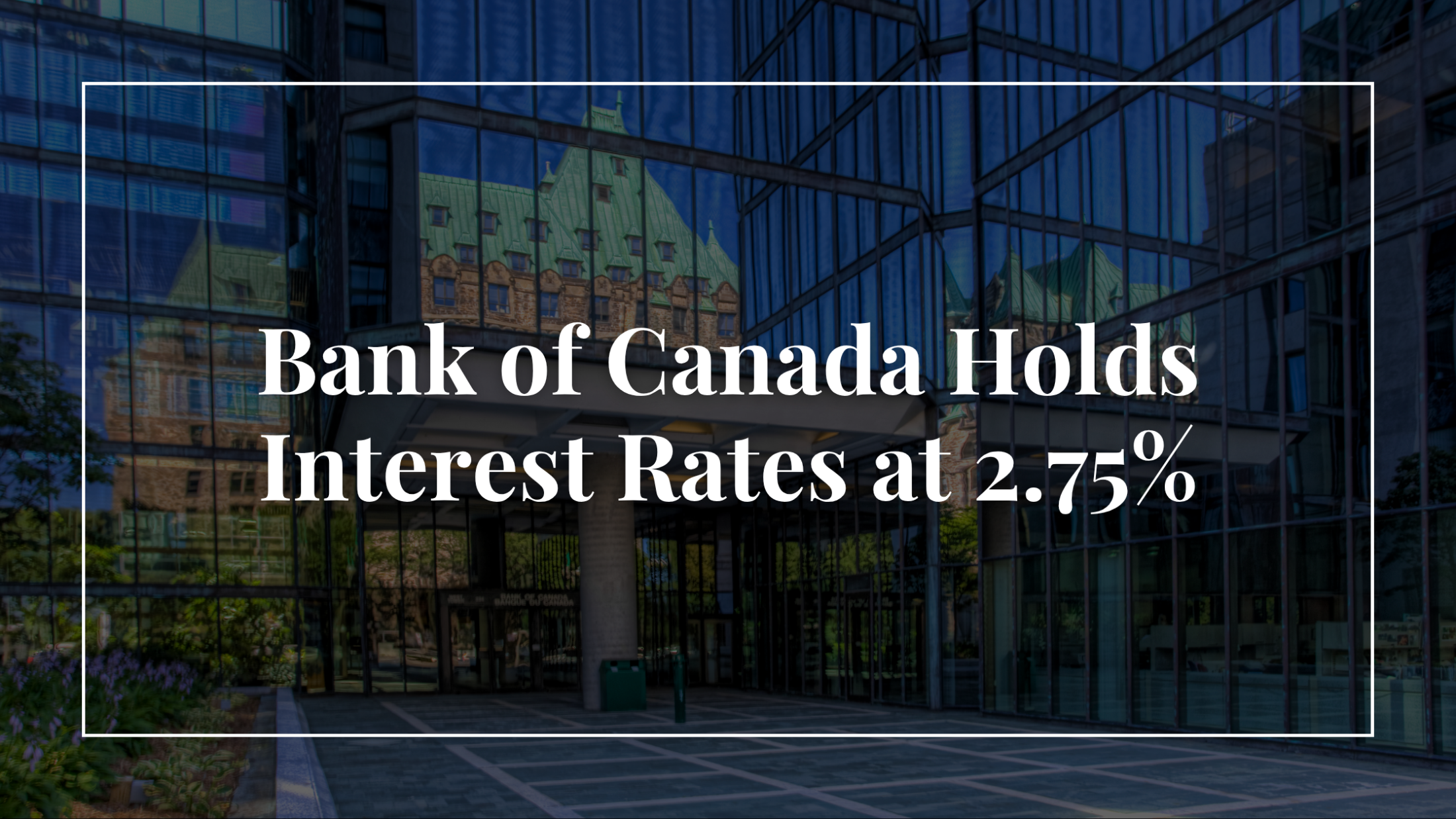
Bank of Canada Holds Interest Rate at 2.75%

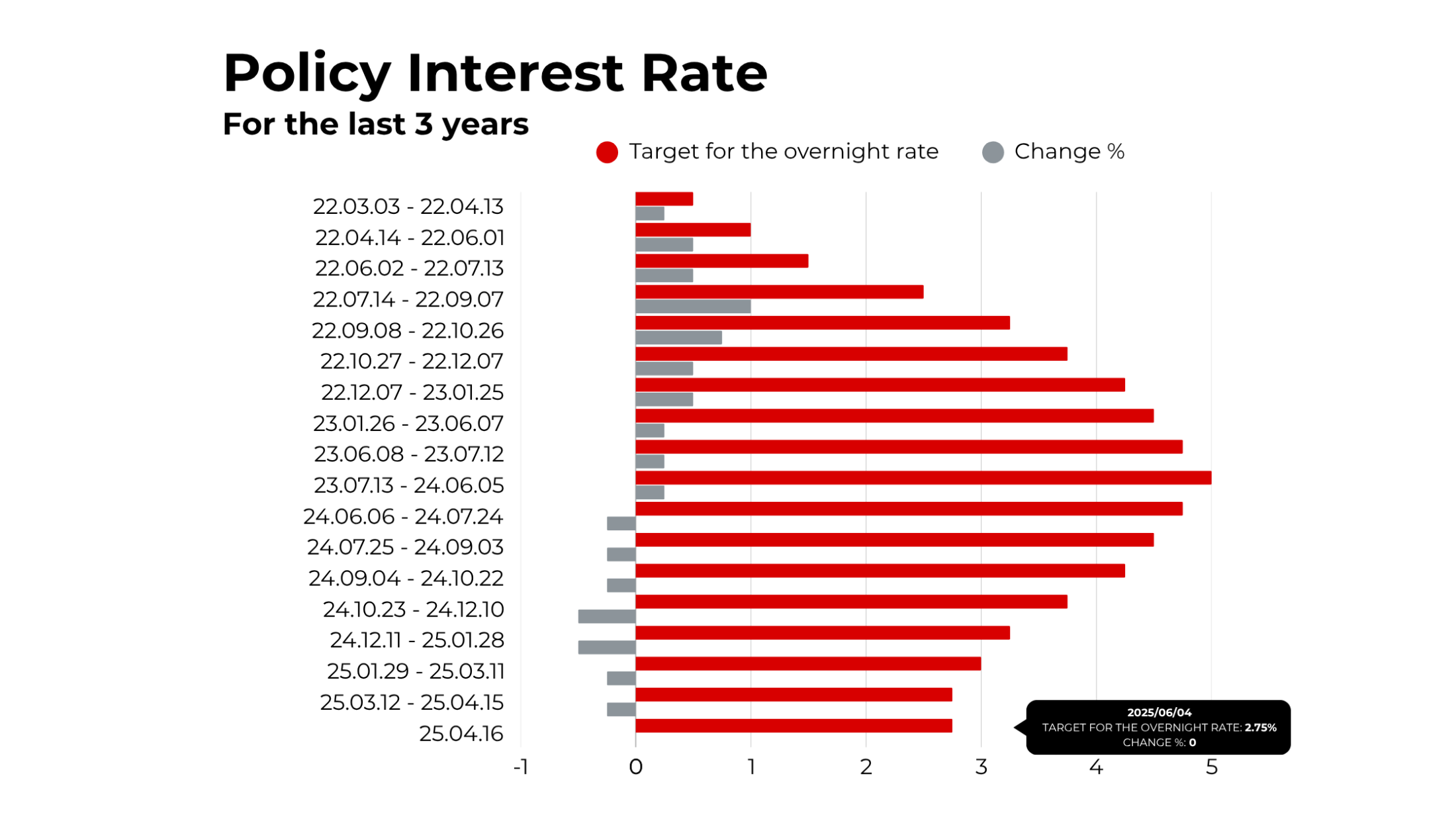
The Bank of Canada just announced that it’s keeping its key interest rate steady at 2.75%. That means borrowing costs, like loans and mortgages, aren’t going up (at least for now). The Bank Rate is set at 3%, and the deposit rate is 2.70%. So, why did the Bank decide to hold steady?

There’s still a lot of tension around global trade especially between the U.S. and China. While things have cooled a little and new talks are happening, the situation is still unpredictable. Tariff rates (those taxes on imports) are much higher than they were at the start of 2025, and more changes could be on the way.

Even though the world economy has been holding up, some of that strength came from businesses rushing to act before new tariffs kicked in. That’s not likely to last. In the U.S., people are still spending, but imports have slowed the economy a bit. Inflation in the U.S. is above 2%, and Europe is leaning on exports and defence spending. China’s growth is slowing down, too.

What’s Happening in Canada?

Canada’s economy grew by 2.2% in the first quarter—slightly better than expected. A big part of that growth came from increased exports to the U.S. and businesses stocking up on inventory. But consumer confidence has dropped, and people are spending a bit less. Housing activity is down, and unemployment has gone up to 6.9%, especially in industries that depend heavily on trade.

Looking ahead, the Bank expects the Canadian economy to slow down in the second quarter. Exports and inventory boosts are expected to fade, and household and business spending is likely to stay soft.

About the Inflation

Canada’s inflation rate dropped to 1.7% in April, mostly because the federal carbon tax was removed. But if you take taxes out of the picture, prices actually rose by 2.3%—a bit higher than the Bank expected.

People are still worried that tariffs will make things more expensive, and many businesses say they plan to pass those costs onto customers. So, even though the economy is softening, price pressures haven’t gone away.

Why the Bank Is Staying Put (For Now)

With all this uncertainty—especially around U.S. trade policy—the Bank of Canada is choosing to wait and see. Some parts of the economy are slowing, but inflation is still higher than they’d like in certain areas. The Bank wants to make sure inflation doesn’t get out of control, while also not putting more strain on a slowing economy.

They’re watching a few key things very closely:

  • Will U.S. tariffs reduce demand for Canadian products?

  • How will this affect investment, jobs, and household spending?

  • How quickly will rising costs show up in consumer prices?

  • Are inflation expectations rising?

What’s Next?

The Bank’s next interest rate decision and full economic report will be released on July 30, 2025. Until then, they’ll be keeping a close eye on the data and any changes in global trade policies.

The Bank of Canada is staying cautious. The economy is showing some cracks, but inflation is still a concern. So, they’re keeping rates steady while they wait for more clarity—especially from our neighbours in the U.S.

If you're a business owner or homeowner, now might be a good time to review your financial plans. While rates aren’t going up, the outlook remains uncertain.

Read

April Showed the Usual Spring Boost… But It’s Still Quieter Than Last Year

As expected, spring brought a bit more action to the market compared to March. More homes were sold in April than the previous month, which is pretty normal for this time of year. But here’s the thing: when you compare it to April last year, home sales were actually down by 23.3%.

That means fewer people are buying homes compared to a year ago—and one of the main reasons is that many are waiting for borrowing costs to come down. People also want a bit more clarity about where the economy is heading before making a big decision like buying a home.

Prices Have Dropped

The average selling price in the GTA in April 2025 was $1,107,463, which is down 4.1% from last year. And the MLS® Home Price Index, which gives a better picture of price trends, dropped by 5.4% year-over-year. However, it’s worth noting that average prices have now increased for the third month in a row. So while prices are still lower than they were a year ago, they have been quite stable with modest price increases on a on a month-to-month basis.

What does that mean for buyers and sellers?

  • For buyers: Lower prices, combined with slowly improving borrowing conditions, mean monthly mortgage payments are becoming a bit more affordable. You also have a lot more homes to choose from right now, giving you some negotiation power.

  • For sellers: It's a more competitive market, so pricing your home right is key. With inventory being higher, buyers have options—and they’re taking their time to find the best deal.

More Homes Are Being Listed

New listings rose by 8.1% compared to April 2024. That’s good news for buyers—there’s more inventory on the market, which gives you more choice and helps balance prices.

Economic Uncertainty Still Looms

There’s still a lot of uncertainty floating around—especially when it comes to the broader economy and Canada’s trade relationship with the U.S. According to TRREB President Elechia Barry-Sproule, if things improve economically and internationally, we might see a bump in market activity in the months to come.

Buyers may find more breathing room to make decisions, while sellers will need to adjust their expectations and work with the right strategy to sell in today’s market.

Subscribe to our newsletter to get monthly real estate updates, market trends, and helpful tips straight to your inbox.

Read

Royal LePage Q1 2025 Market Update: What’s Happening in Canada’s Real Estate Market in Early 2025

The Canadian housing market started 2025 on two very different paths—some areas are heating up, while others are cooling down.

Let’s start with the big picture. Home prices across Canada went up slightly in the first few months of the year. On average, prices rose 2.1% compared to last year, and 1.2% compared to the end of 2024. But not every area is following the same trend.

In expensive cities like Toronto and Vancouver, home prices have actually gone down a bit. In the Greater Toronto Area (GTA), prices dropped by 2.7% year-over-year, and condos saw an even bigger drop of 4%. Many buyers in these cities are feeling unsure because of ongoing political and economic issues—especially the trade tensions with the U.S. As a result, some people are waiting to buy, hoping for more clarity or better deals.

On the other hand, more affordable areas like Quebec, the Prairies, and Atlantic Canada are seeing steady growth. Quebec City is leading the way with a 17% price increase compared to last year. Montreal is also seeing strong growth. These regions are benefiting from a mix of lower interest rates, fewer homes for sale, and strong demand from buyers looking for more budget-friendly options.

When it comes to how Canadians feel about the economy, it’s a mixed bag. About half of Canadians say they’re confident in the country’s economic future, while the other half are not. People in Quebec are the most optimistic, while those in Manitoba, Saskatchewan, and Alberta feel the least confident—especially in places like Fort McMurray.

Despite the uncertainty, Canada’s real estate market is holding up well. Our financial system is strong, and even with all the global challenges, home prices remain fairly stable. Interest rates have come down quite a bit since last year, making it a better time for some buyers to borrow money. Experts say more rate cuts could come later this year if things stay on the current path.

With a federal election coming soon, housing affordability is a big issue. Each political party has a plan to make housing more accessible—whether that’s building more homes, cutting taxes, or helping first-time buyers. While these ideas could help over time, real change will take cooperation and long-term effort from all levels of government.

Looking ahead, Royal LePage expects home prices across Canada to rise about 5% by the end of the year. In the GTA, prices are expected to rise by 3.5%, though that’s a bit lower than earlier forecasts because the market has been slower than usual.

Canada’s housing market is split. Expensive cities are seeing a slowdown, while smaller, more affordable regions are picking up speed. If you’re buying or selling, it’s important to understand your local market. In quieter markets like Toronto, there may be good opportunities for buyers to negotiate. In faster-moving areas like Quebec, acting quickly could make a big difference.

No matter where you are, the real estate market continues to be a solid long-term investment—and those who stay informed and prepared will be in the best position to make smart decisions.

Check out the Royal LePage Q1 2025 report here.

Read

Bank of Canada Keeps Interest Rate Steady at 2.75%

The Bank of Canada has decided to keep its main interest rate at 2.75%, as concerns about global trade and economic uncertainty continue to grow.

A big reason for the cautious approach? Ongoing trade tensions, especially coming from the U.S., have made the economic outlook unpredictable. Depending on how things play out, Canada could either stay on a steady path—or face a recession if trade conflicts drag on.

BOC is Considering Two Possible Scenarios Ahead

Scenario 1: If tariffs stay limited, Canada’s economy may slow temporarily, but inflation will stay close to the 2% target.

Scenario 2: If tensions escalate, we could see a recession in Canada with inflation possibly rising above 3% next year.

There’s no clear path forward yet, and a lot depends on decisions made outside of Canada.

What’s Happening Globally?

  • In the U.S., growth is slowing, and inflation worries are rising.

  • In Europe, growth remains weak.

  • China was doing well but is starting to cool down.

  • Markets everywhere are shaky due to constant tariff changes and uncertainty.

  • Oil prices have dropped, signaling weaker global growth.

What’s Canada’s Situation?

The economy is showing signs of slowing down:

  • People and businesses are spending less.

  • Hiring is slowing, and March saw a drop in employment.

  • Inflation was 2.3% in March, but expected to dip a bit due to lower oil prices and the removal of the carbon tax. Still, higher prices may come back due to tariffs and supply issues.

Looking Forward

The Bank of Canada says it’s staying cautious. They want to support economic growth while keeping inflation under control. They’ll keep an eye on how rising costs, weaker demand, and changing expectations affect things over time.

Check out the Bank of Canada's recent policy rate release here.

The Bank’s next interest rate announcement is set for June 4, 2025, and we’ll get another full economic update in July.

Read

Toronto Real Estate Market Update: March 2025 Shows Signs of Affordability, But Buyers Remain Cautious

March 2025 brought a mix of positive news and continued caution to the Greater Toronto Area (GTA) real estate market. While affordability has improved thanks to lower borrowing costs and softer home prices, many buyers are still sitting on the sidelines—waiting for greater economic certainty and more favorable conditions.

Homeownership Gets Slightly More Affordable

Compared to March 2024, homeownership in the GTA became more financially accessible. According to the Toronto Regional Real Estate Board (TRREB), both home prices and borrowing costs declined over the past year, making monthly mortgage payments more manageable for potential buyers.

TRREB President Elechia Barry-Sproule noted that “homeownership has become more affordable over the past 12 months,” and with expected interest rate cuts this spring, affordability may continue to improve. Increased inventory is also giving buyers more options—and more negotiating power.

Prices Down, Listings Up

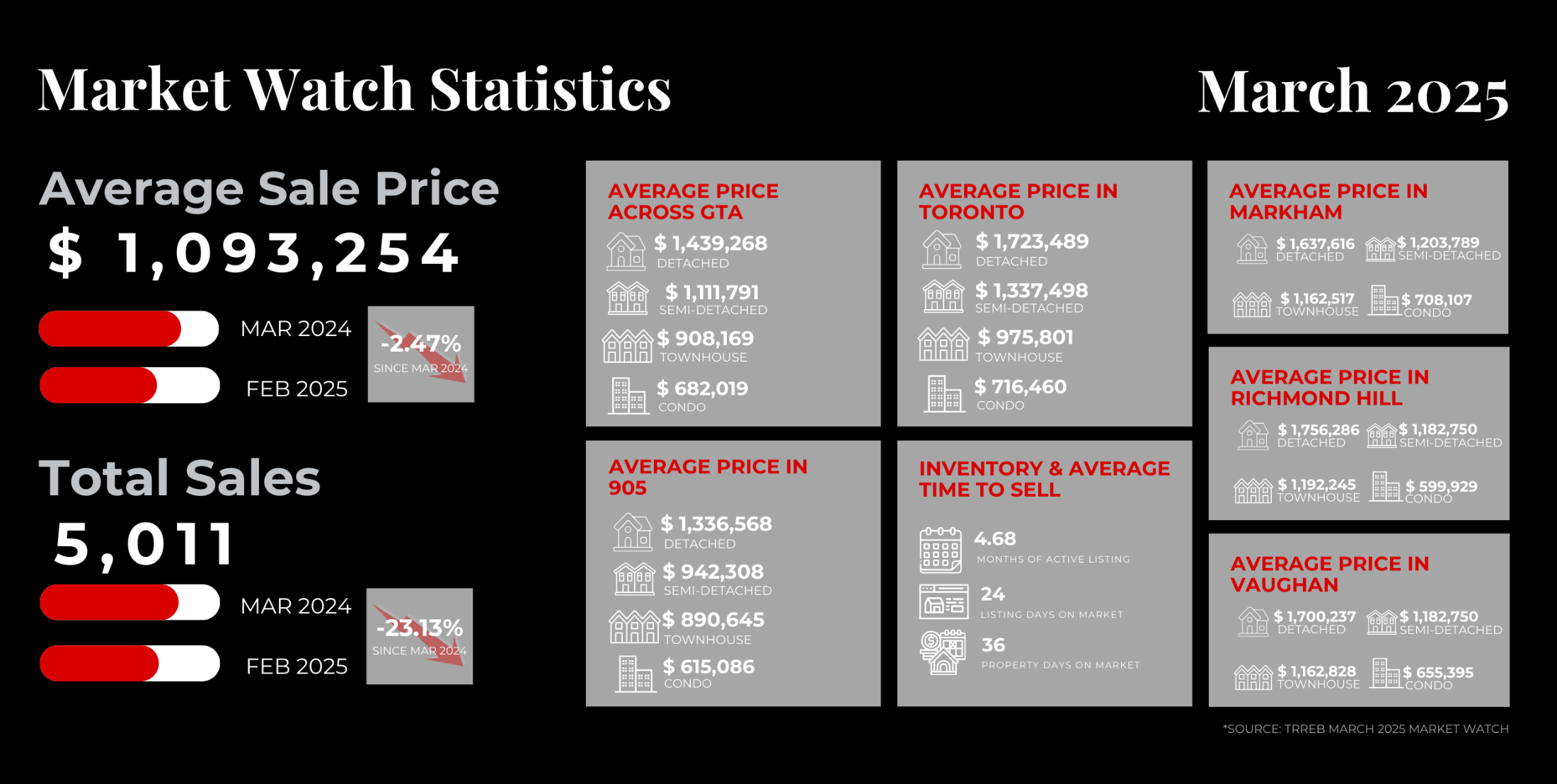
The average selling price in March 2025 was $1,093,254, a 2.5% decrease compared to the same month last year. Meanwhile, the MLS® Home Price Index Composite benchmark dropped 3.8% year-over-year, pointing to a gradual correction in home values.

On the listing side, sellers were more active. The GTA saw 17,263 new listings hit the market—a 28.6% increase from March 2024. This means buyers now have more selection, which could further ease competition and keep prices from spiking in the short term.

Sales Activity Slows Amid Cautious Optimism

Despite improving affordability, home sales were down by 23.1% year-over-year, with 5,011 transactions recorded through TRREB’s MLS® System in March 2025. Even on a seasonally adjusted basis, sales dipped compared to February.

Why the hesitation?

A lot of it comes down to uncertainty. TRREB Chief Information Officer Jason Mercer pointed out that concerns around job security and broader economic conditions—especially Canada’s trade relationships and the upcoming federal election—are prompting many households to wait and see before making big financial commitments like buying a home.

What This Means for Buyers & Sellers

For Buyers:

If you’re financially ready, this could be a window of opportunity. With more listings and softening prices, you have room to negotiate and find the right fit. And if interest rates drop later this year, you may have the chance to refinance for better terms.

For Sellers:

With more competition on the market, pricing your home strategically is crucial. Presentation matters too—homes that show well tend to sell faster. Work with an agent who understands the nuances of today’s market and can help you stand out.

What Could Shift the Market?

Spring 2025 may bring some momentum back to the market if interest rates begin to fall and if economic confidence improves. According to TRREB CEO John DiMichele, access to affordable housing remains a top priority among Canadians, and government action post-election could play a role in supporting both supply and demand.

In the meantime, the GTA remains a buyer-friendly market—but one that could shift quickly depending on economic and policy developments.

Sign up for our newsletter to receive regular updates, expert insights, and practical tips—whether you’re buying, selling, or just keeping an eye on the market.

Read

Toronto Real Estate Market Shift: February 2025 Update & Insights

If you’ve been watching the Toronto real estate market, you know things are shifting. February 2025 was all about buyer advantage—with more listings, slightly softer home prices, and a cautious approach from buyers. So, what does this mean if you're thinking about buying or selling in the GTA housing market?

Home Prices See a Small Drop

In February 2025, the average home price in Toronto and the GTA came in at $1,084,547, marking a 2.2% drop from February 2024. The MLS® Home Price Index Composite benchmark also edged down 1.8% year-over-year.

Month-over-month, prices softened slightly after seasonal adjustment, showing that Toronto home values are stabilizing but still adjusting to market conditions.

More Homes for Sale, Giving Buyers Options

February saw 12,066 new listings hit the market—up 5.4% from last year. That means buyers have more homes to choose from, leading to better negotiation power in the Toronto housing market.

For sellers, this means pricing your home competitively is key. Overpricing could leave you sitting on the market longer than expected.

Home Sales Slow Down, But Opportunity Awaits

Despite more listings, home sales dropped 27.4% year-over-year, signaling that buyers are taking their time. High mortgage rates are a major factor, making affordability a challenge for many. But with a potential interest rate cut in Canada later this year, we could see demand pick up in the second half of 2025.

Why Are Buyers Waiting?

Beyond mortgage rates, economic uncertainty and Canada’s trade relationship with the U.S. are making some buyers hesitant. According to TRREB President Elechia Barry-Sproule, many GTA residents want to buy, but monthly mortgage payments remain a challenge.

Jason Mercer, TRREB’s Chief Market Analyst, noted that lower borrowing costs and a clearer economic outlook could bring more buyers into the market later in 2025.

What This Means for Buyers & Sellers

For Buyers:

With more homes for sale in Toronto, now’s a good time to shop around and negotiate. If you find the right property, you might be able to secure a deal. Plus, if mortgage rates drop, you could refinance at a lower rate later.

For Sellers:

The market is competitive, so pricing realistically and presenting your home well (think staging, decluttering, and professional photos) can make all the difference. Work with a GTA real estate agent who understands the latest trends to maximize your sale price.

What’s Next for the GTA Housing Market?

The next few months will be key. If interest rates in Canada drop, expect home sales in Toronto to pick up. For now, it’s a buyer’s market in many areas, but the landscape could shift quickly.

Want the latest real estate news, market trends, and home-buying tips?

📩 Subscribe to our mailing list for insider updates on home prices, market shifts, and expert real estate advice!

Read

Bank of Canada Cuts Interest Rates to 2.75%—What You Need to Know About This New Cut

The Bank of Canada has lowered its key interest rate by 25 basis points, bringing it down to 2.75%. This decision could have a broad impact, influencing mortgage rates, loan costs, and overall economic activity.

Why Did the Bank of Canada Lower Interest Rates?

Simply put, the economy has been slowing down, and while inflation has moderated, it remains a concern. The Bank of Canada is working to balance price stability with economic growth. Lowering interest rates makes borrowing more affordable, potentially encouraging increased spending and investment by individuals and businesses.

What’s Going On with the Economy?

Canada’s economic growth has been sluggish in recent months. While job creation continues, wage growth has not kept pace with rising living costs. Inflation has come down from its peak, but essentials like groceries and rent remain expensive.

Additionally, global economic uncertainty—such as U.S. trade policies and tariffs—poses potential risks to Canada’s exports. If trade slows, economic growth could be further impacted. The Bank of Canada is closely monitoring these factors as it makes decisions on future interest rate adjustments.

How Does This Affect You?

For Homeowners and Buyers

  • Variable-rate mortgage holders may see a slight decrease in monthly payments.

  • Those renewing a fixed-rate mortgage could benefit from lower rates compared to last year, making it essential to shop around for the best deal.

  • First-time homebuyers may find borrowing slightly more affordable, though home prices in many cities remain high.

For Loans and Credit Cards

Lower interest rates can reduce costs for personal loans, lines of credit, and business financing. While credit card interest rates are less directly impacted, those carrying debt may want to explore lower-interest alternatives.

What’s Next?

The Bank of Canada will continue assessing inflation and economic performance before making further rate decisions. If economic conditions improve, additional cuts may not be necessary. However, if inflation remains high or the economy weakens further, another rate reduction could be on the horizon.

This rate cut is designed to provide economic stability and make borrowing more accessible. Whether you're a homeowner, prospective buyer, or simply managing your finances, staying informed will help you make well-informed financial decisions. Keep an eye on future announcements to stay ahead of potential changes.

Read

2025 Toronto Real Estate Market: Year in Review & What’s Ahead

As we reflect on 2024 and look ahead to 2025, the Toronto real estate market continues to evolve in response to economic shifts, affordability concerns, and government policies. The Toronto Regional Real Estate Board (TRREB) recently released its annual report, outlining key trends, challenges, and opportunities in the housing market.

2024: A Year of Transition

Last year was marked by high borrowing costs and moderate home sales, with interest rate relief finally arriving toward the end of 2024. Home prices remained relatively stable, while buyers cautiously navigated affordability constraints. Rental demand stayed strong as many renters opted to delay home purchases due to high financing costs.

Key Market Numbers: January 2025

  • Home Sales: 3,847 sales in January 2025 (-7.9% YoY)

  • New Listings: 12,392 new listings (+48.6% YoY)

  • Average Selling Price: $1,040,994 (+1.5% YoY)

  • Projected 2025 Sales: 76,000 homes (+12.4% vs. 2024)

  • Projected 2025 Average Price: $1,147,000 (+2.6% vs. 2024)

  • Days on Market: Homes are taking longer to sell due to more inventory

2025 Outlook: Moderate Growth & Market Adjustments

Home Sales & Prices

  • TRREB predicts 76,000 home sales in the GTA, driven by anticipated further interest rate cuts.

  • The average home price is forecasted to rise by 2.6% to $1,147,000, with stronger price growth in detached and semi-detached homes compared to condos.

Affordability & Supply Challenges

  • The "missing middle" housing crisis continues, with a need for more townhomes, duplexes, and purpose-built rentals.

  • High development charges and land transfer taxes are adding to affordability concerns, prompting TRREB to advocate for tax reforms.

Rental Market Trends

  • Strong demand for rental properties persists, especially as immigration remains a key driver of population growth in the GTA.

  • Renters are increasingly considering homeownership, especially if mortgage rates decline further.

Economic Uncertainty & Market Risks

  • The Bank of Canada’s interest rate strategy will be crucial in shaping market activity.

  • Potential U.S. tariffs on Canadian exports could impact consumer confidence, job security, and economic stability.

The Toronto housing market is poised for gradual recovery in 2025, with interest rate cuts expected to bring more buyers back into the market. However, affordability, housing supply, and government policies will continue to play a significant role in shaping real estate trends. Whether you're a buyer, seller, or investor, staying informed about market dynamics will be key to making smart real estate decisions in the year ahead.

Thinking about buying or selling in 2025? Contact us today!

Read

Smart Homes, Smarter Living: The Rise of the Smart Home

Let’s talk about something that’s becoming a big deal in real estate—smart homes. Smart home technology is here, and it’s changing the way we live.

After 18 years in real estate, I’ve seen trends come and go, but this? This one’s sticking around. Back in the day, people wanted homes with big backyards, modern kitchens, or great school zones (still important, by the way). Now, more and more buyers are asking, “Does this home have smart features?”

What Is a Smart Home, Really?

If you’re wondering what makes a home “smart,” here’s the short version: it’s a home equipped with technology that makes your life easier. Think voice-controlled lights, thermostats that know when you’re not home, or security cameras you can check from your phone.

Some of the most popular smart home features include:

Smart Thermostats

These help you save energy and keep your home at the perfect temperature—no more fiddling with dials.

Smart Security Systems

Doorbell cameras, smart locks, and motion detectors give you peace of mind, especially if you’re away.

Smart Lighting

Turn lights on or off from your phone or schedule them to match your routine.

Voice Assistants

Alexa, Google Home, or Siri can do everything from playing music to setting reminders—or even turning off the lights you forgot about.

Car Charging Ports

With the rise of electric vehicles, smart car charging stations are becoming a key feature. Charge your EV efficiently at home, with options to monitor usage and optimize charging during off-peak hours.

Smart Appliances

Refrigerators that track your groceries, ovens you can preheat from your phone, and washing machines that adjust settings based on load size. These appliances add convenience, efficiency, and even energy savings to your home.

Smart Blinds & Shades

Automated window treatments that adjust based on time of day or temperature can help with energy efficiency and convenience.

Why Smart Homes Are Booming in the GTA Luxury Market

Here in the Greater Toronto Area, smart homes are becoming a major selling point, especially in the luxury market. Here’s why:

  1. Convenience: Life is busy. Whether you’re juggling work, kids, or just trying to carve out a little downtime, smart homes take care of the small stuff so you can focus on what matters.

  2. Energy Efficiency: Let’s face it—energy bills aren’t getting any cheaper. Smart thermostats, blinds, and appliances can help you save money without even trying.

  3. Security: In higher-end neighborhoods, security is a top concern. Smart systems let you keep an eye on things, even when you’re on vacation.

  4. Resale Value: Homes with smart tech stand out. In my experience, buyers are willing to pay more for homes that are future-ready.

Thinking About Getting Smart?

If you’re new to the idea of smart homes, don’t worry. It’s not as overwhelming as it sounds. Here’s how to get started:

  1. You don’t need to overhaul your entire home. Start with a smart plug or a single light bulb. You’ll be surprised how quickly you get hooked.

  2. Are you looking for better security? Lower energy bills? More convenience? Start with what’s important for you now.

  3. If you’re renovating or building, talk to your contractor about smart wiring—it’ll save you time and money later. Always plan ahead.

  4. Whether you’re buying, selling, or upgrading, work with a real estate agent who understands the value of smart homes (hint: yep, that’s me).

Smart homes aren’t just a trend—they’re becoming the norm. And if you’re in the market for a luxury home, having smart features can make all the difference.

What do you think? Ready to future-proof your home? If you’re curious about what smart home features would work best for you—or if you’re looking to buy or sell—I’d be happy to help. Contact us to schedule a free online consultation.

Read

Bank of Canada Cuts Interest Rates: What It Means for Homebuyers and Investors

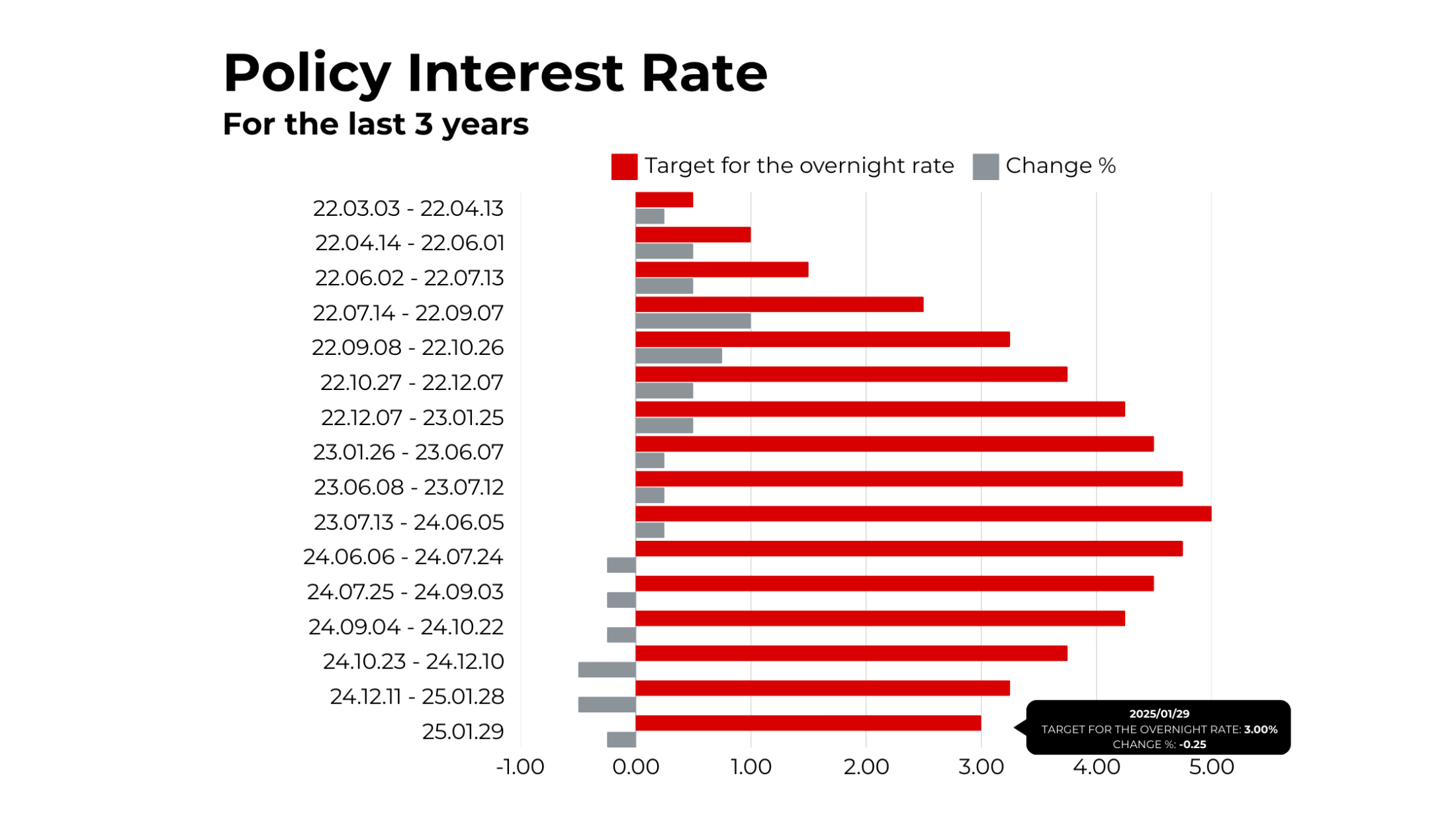
The Bank of Canada just announced a 25-basis-point rate cut, bringing its key policy rate down to 3%. This move marks a significant shift in monetary policy, signaling the end of quantitative tightening and a more accommodative stance to support economic growth. But what does this mean for real estate, mortgages, and the broader economy? Let’s break it down.

Why Did the Bank of Canada Cut Rates?

The decision to lower the policy rate comes amid a mix of economic factors. Inflation is hovering around the 2% target, job growth is stabilizing, and consumer spending is picking up. However, business investment remains sluggish, and global trade uncertainties—especially with potential US tariffs—pose risks to Canada’s economic outlook.

With the economy still operating below its full potential, the Bank has opted for a rate cut to help stimulate borrowing, investment, and overall economic activity. The move also aligns with global trends, as other central banks adjust their policies in response to shifting economic conditions.

How Does This Affect Mortgages?

For homebuyers and existing homeowners, this interest rate cut is welcome news. Banks have also cut their prime rate by 25bps to 5.20% following the Bank of Canada’s lead. Here’s how it impacts you:

  • Variable-Rate Mortgages: If you have a variable-rate mortgage, you’ll see an immediate drop in your interest rate, leading to lower monthly payments.

  • Fixed-Rate Mortgages: While fixed mortgage rates are influenced more by bond yields than the Bank of Canada’s policy rate, this rate cut could still contribute to downward pressure on fixed rates.

  • Mortgage Renewals: If you’re renewing your mortgage soon, this could be an opportunity to secure a more favorable rate and lower your overall borrowing costs.

As borrowing becomes more affordable, we may see increased activity in the housing market as more buyers take advantage of lower rates to enter the market.

Impact on Real Estate Market

Lower interest rates typically encourage more homebuyers to enter the market, increasing demand. Here’s what to watch for:

Increased Affordability

  • Lower borrowing costs mean reduced mortgage payments, particularly for those with variable-rate mortgages, who will see immediate relief.

  • Buyers who were previously on the sidelines may find it easier to qualify for a mortgage or afford a higher price point, potentially increasing demand.

  • Investment Opportunities: For real estate investors, lower rates can improve cash flow and make financing new properties more attractive.

What Should Buyers and Investors Do?

  1. Get Pre-Approved: If you’re considering buying a home, now is a great time to get pre-approved for a mortgage while rates are still low.

  2. Review Your Mortgage Strategy: If you have a variable-rate mortgage, keep an eye on future rate announcements. Fixed-rate holders should evaluate whether switching to a lower rate makes financial sense.

  3. Consider Refinancing: If you have a high-interest mortgage, this could be a good time to refinance and lock in a lower rate, reducing your monthly payments.

  4. Think Long-Term: While rates are lower now, they won’t stay down forever. Plan your real estate investments with a long-term perspective.

Looking Ahead: What’s Next for Interest Rates?

The Bank of Canada will closely monitor economic conditions and inflation trends before making further moves. While another rate cut is possible, much will depend on global trade developments, job growth, and overall economic performance.

The next scheduled interest rate announcement is on March 12, 2025, so stay tuned for updates that could impact your mortgage and real estate plans.

This interest rate cut is a big deal for the Canadian real estate market. Whether you’re a first-time homebuyer, an investor, or a homeowner looking to refinance, now is the time to evaluate your options. If you need expert advice on how to navigate these market changes, feel free to reach out—we’re here to help you make the most informed decisions.

Want to stay ahead of the market? Subscribe to our newsletter for expert insights on real estate and mortgage trends!

Read
This website may only be used by consumers that have a bona fide interest in the purchase, sale, or lease of real estate of the type being offered via the website. The data relating to real estate on this website comes in part from the MLS® Reciprocity program of the PropTx MLS®. The data is deemed reliable but is not guaranteed to be accurate.